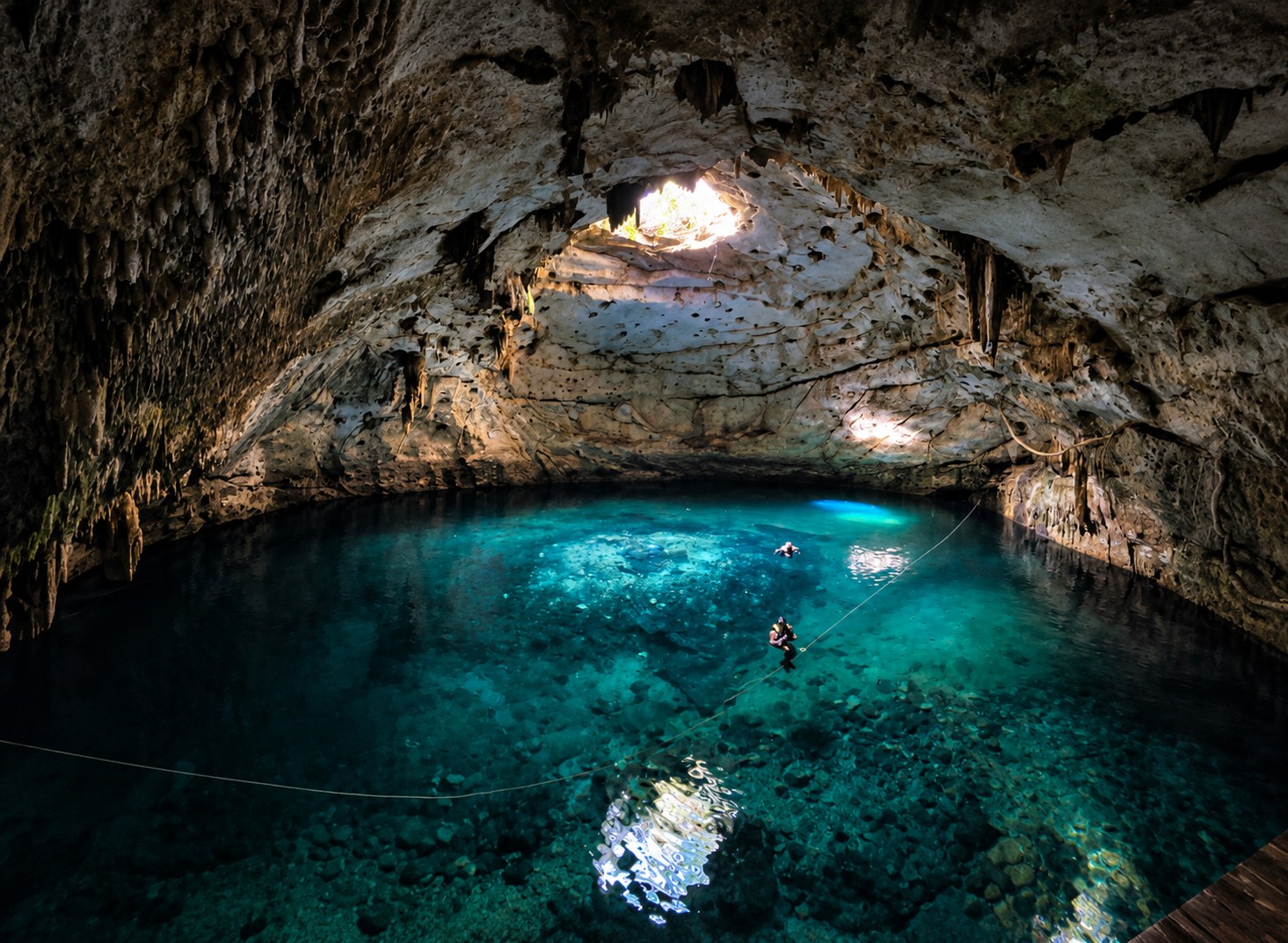
Cooperatives born from access, not from conservation
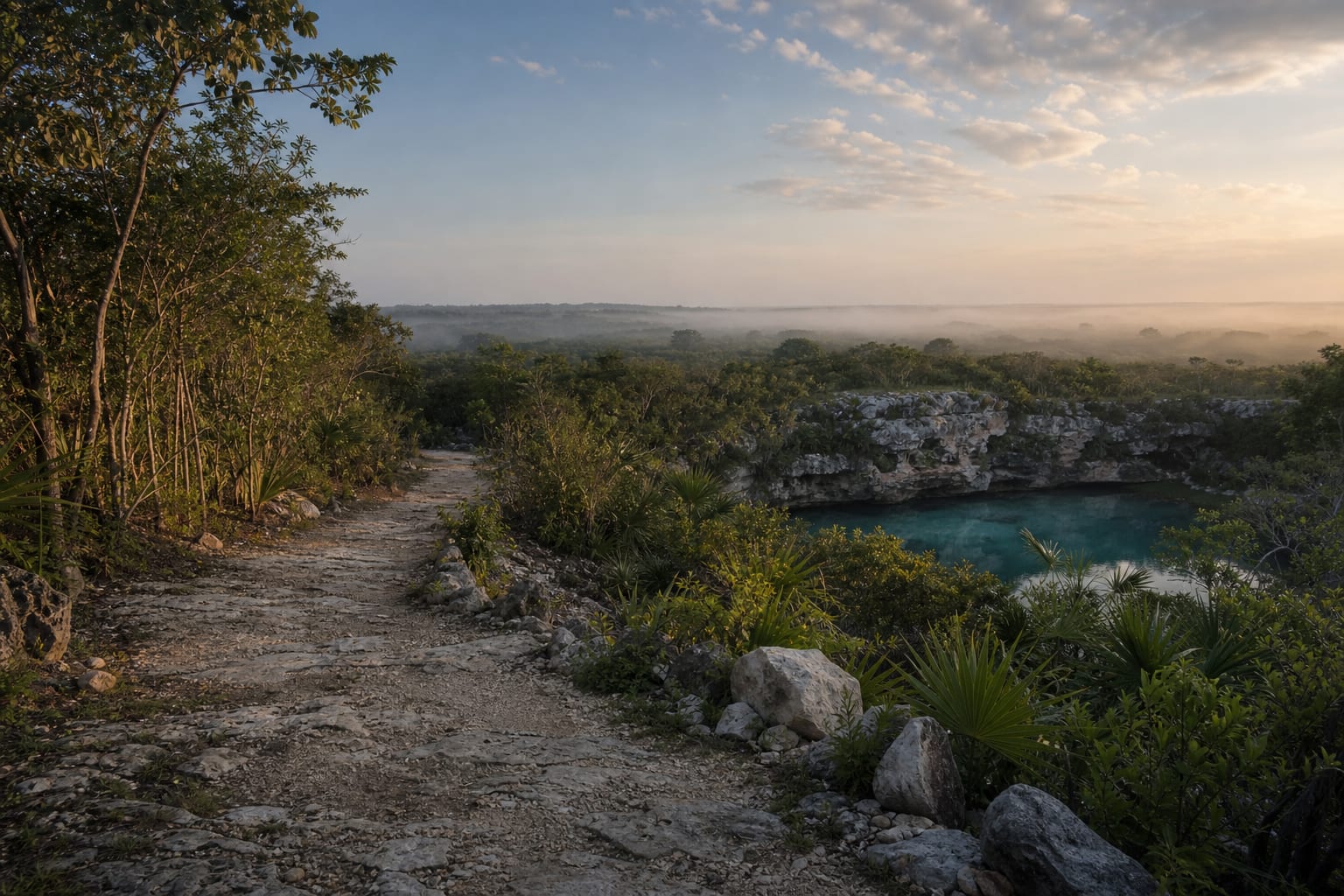
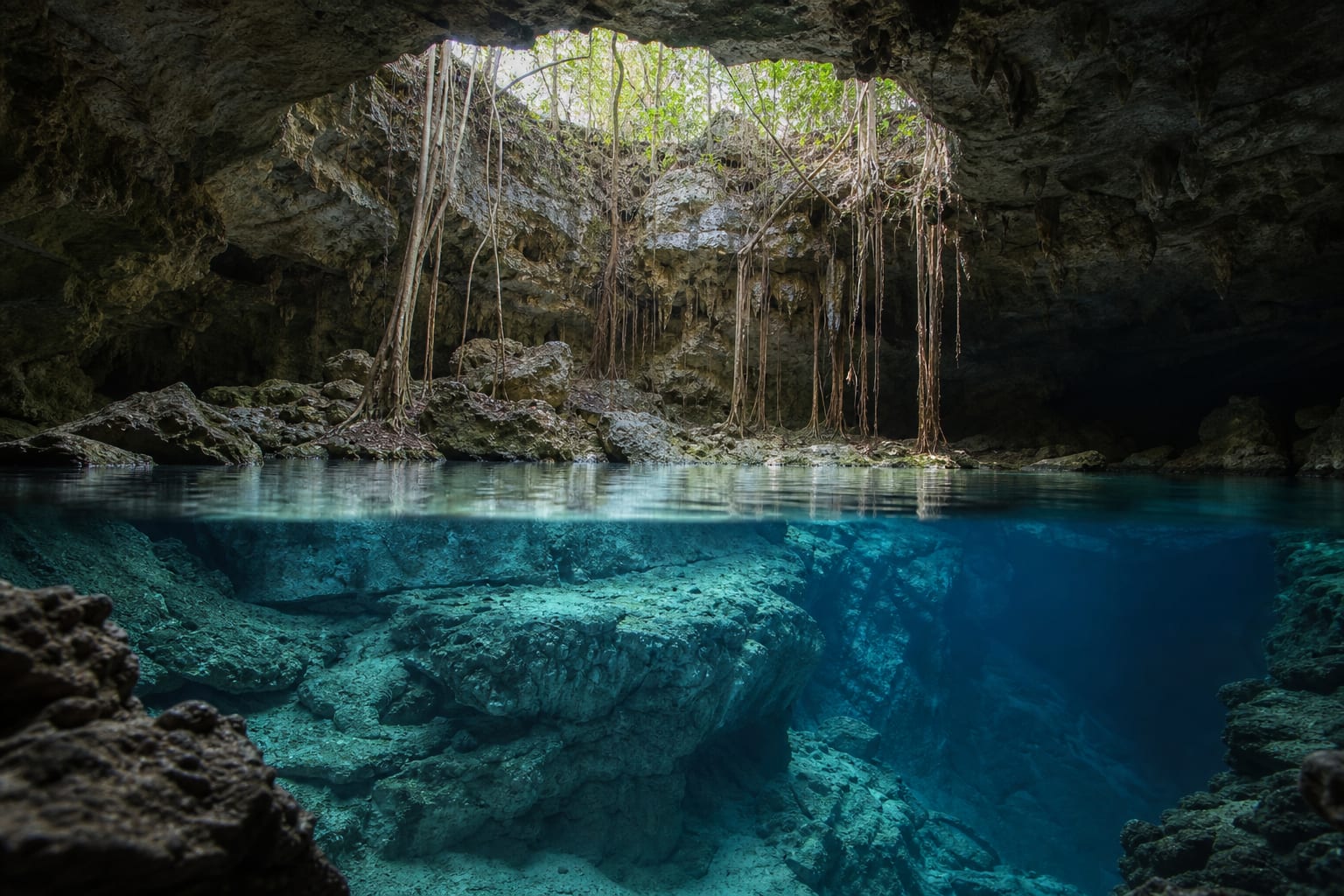
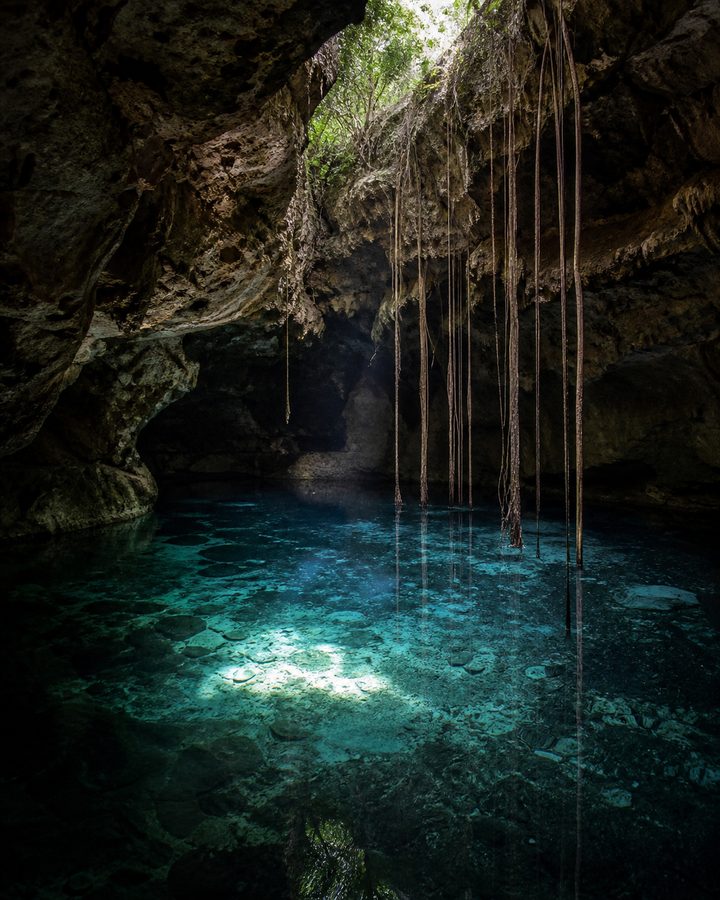
Many of the most visited cenotes in Yucatán sit on ejido land, collective property managed by communities. For decades, access was organised first around farming and household use. Tourism came later, and with it, income that many cooperatives began directing toward maintaining stairs, railings and paths.
Over time, that upkeep has expanded into conservation: visitor caps, sunscreen restrictions, regular cleaning. It does not move at the same pace across every cooperative, but the pattern repeats across different municipalities in northern Yucatán.
Who decides what happens to a cenote
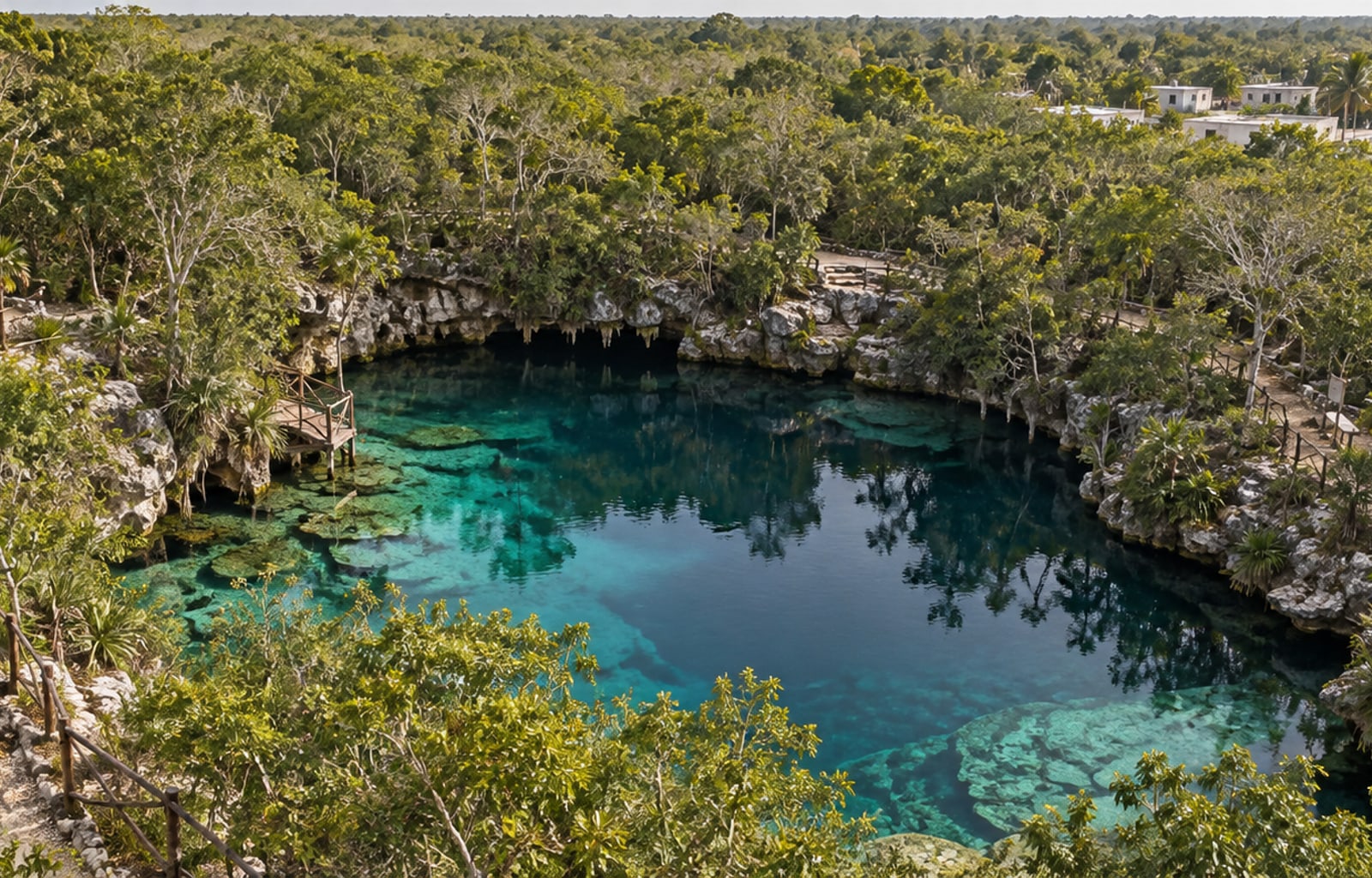
The answer depends on land tenure. A cenote inside an ejido answers to decisions made by the community assembly. One on private land depends on the owner's judgement. One inside a protected natural area adds a layer of federal regulation through CONANP.
These layers coexist within the same territory, sometimes within the same cenote over time, as land use changes or a new protection status is declared. Knowing which regime a cenote falls under helps explain who can, in practice, decide on its care.
Those who map what cannot be seen
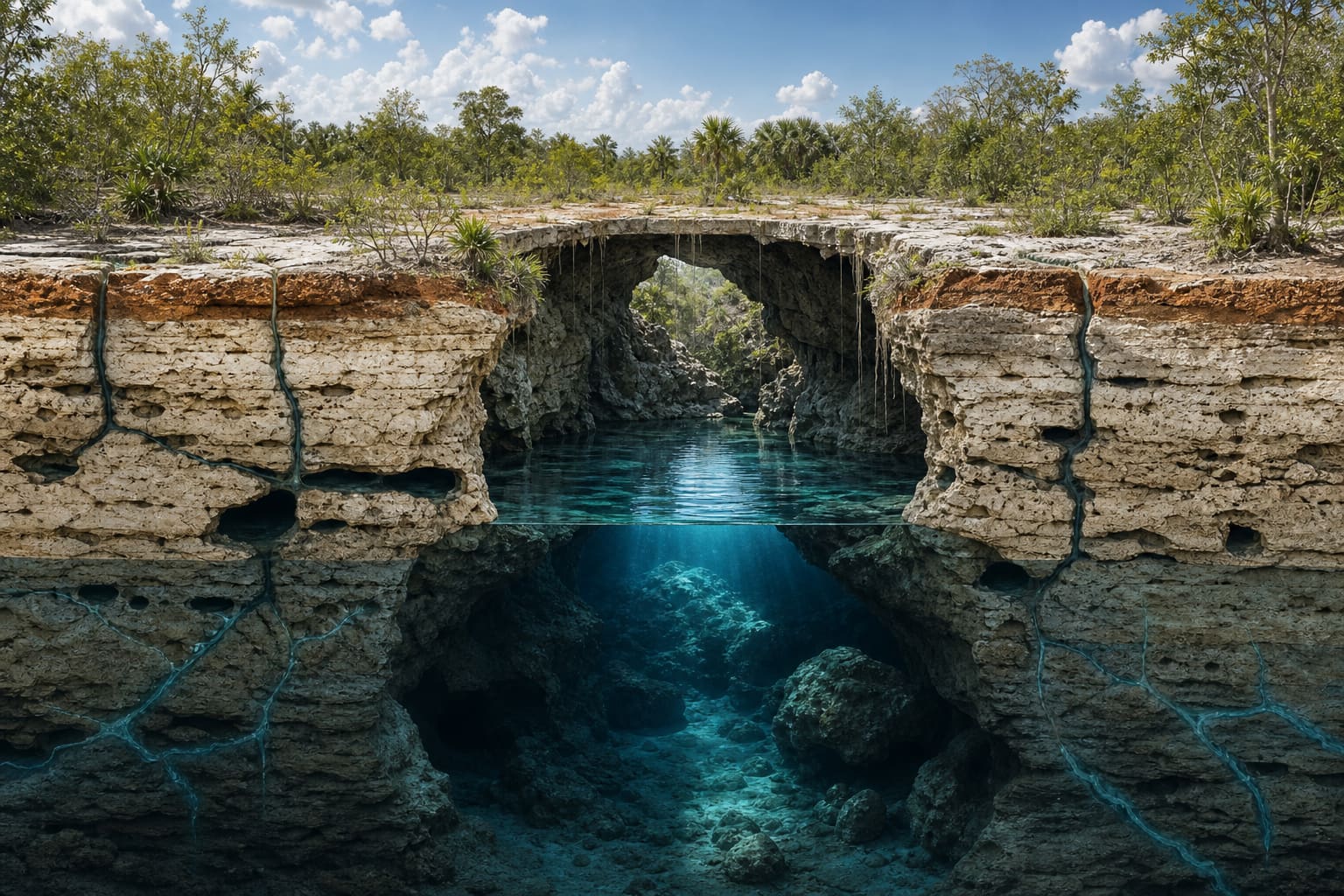
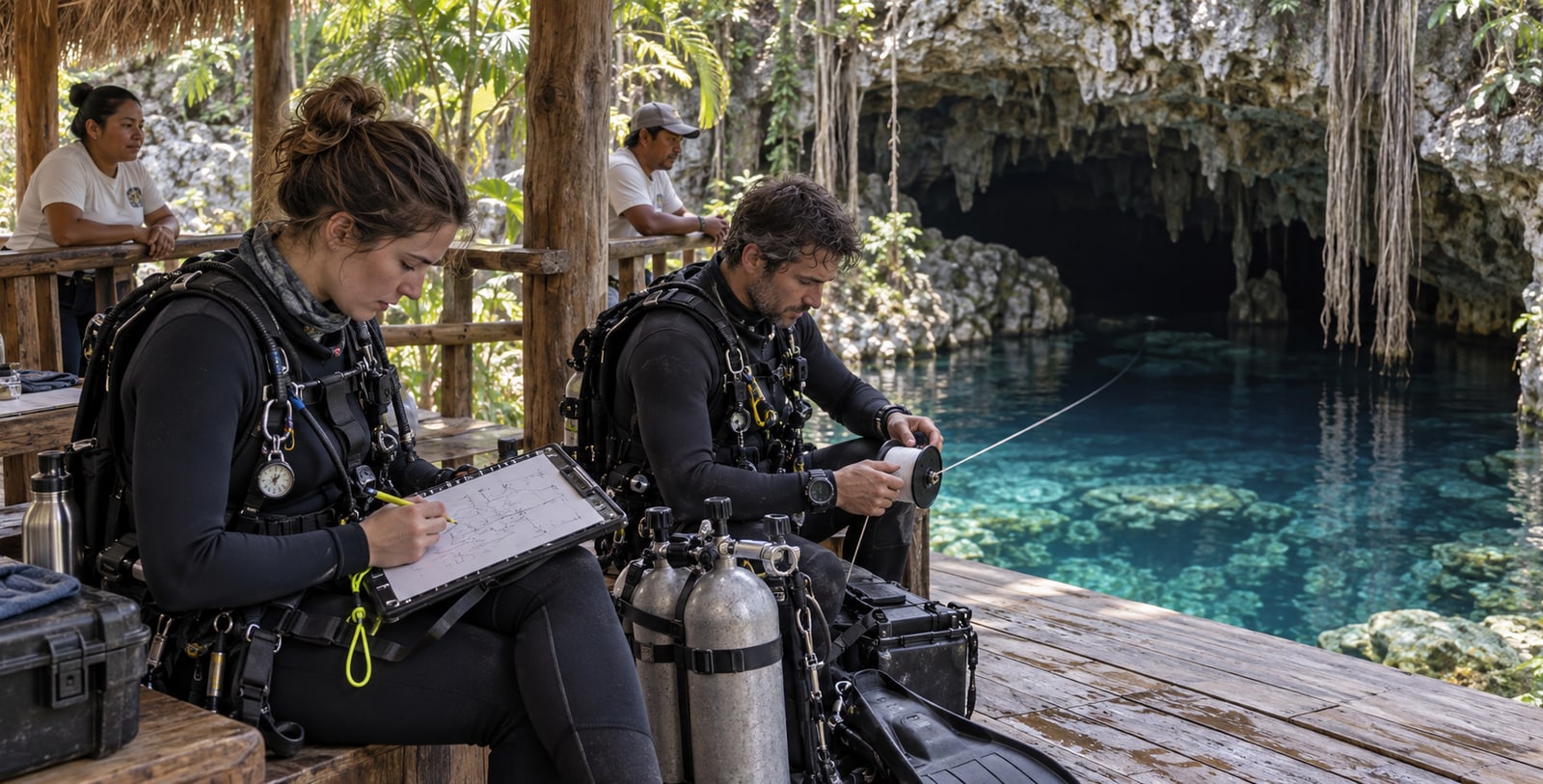
Much of what is known about the true extent of the aquifer comes from cave divers and researchers documenting flooded systems kilometre by kilometre. That work later feeds management decisions: knowing where the water travels helps clarify which surface activities can affect a cenote several kilometres away.
Education as a form of care
Much of the conservation work happens before a visitor touches the water: signage about sunscreen, instructions to shower before entering, visitor caps, guides who explain why certain areas are closed. These are simple measures, but they depend on someone designing them, communicating them and enforcing them consistently.
That communication work usually falls to local guides and cooperative staff, not outside agencies. In practice, they are the first to explain why a cenote is cared for, long before that care reaches a regulation or a sign.
Care also depends on who visits
Choosing a cooperative-managed cenote, following sunscreen guidance and respecting access limits are not symbolic gestures. They are part of the same system of care upheld by communities, researchers and public agencies, just from the visitor's side of it.
Sources and further reading
This article summarises information on community management and conservation published by public and international organisations.