A cenote is not a natural swimming pool
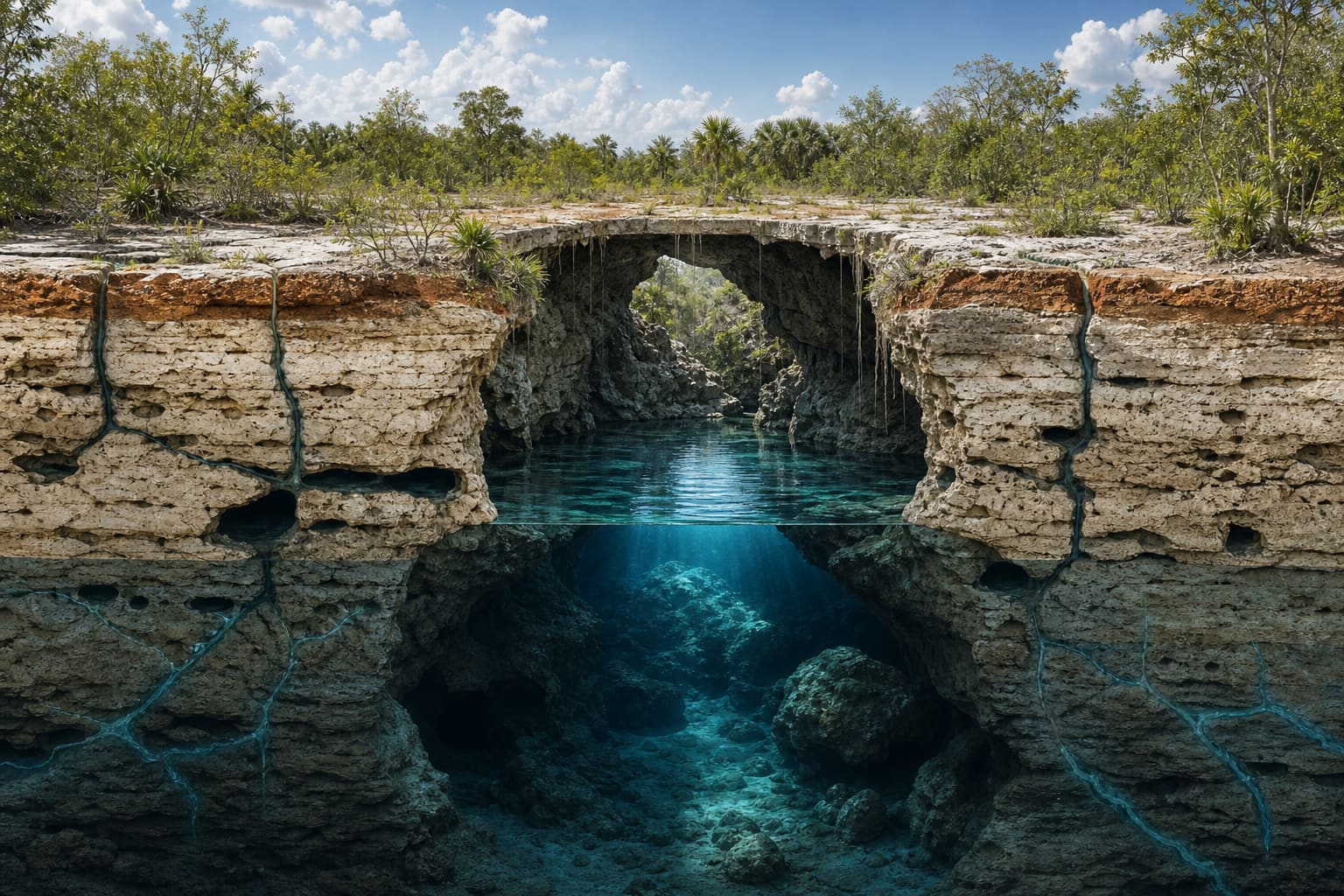
It is a window into groundwater: the visible part of a landscape of rock, caves and conduits continuing beneath the Yucatán Peninsula.
Understand the processConceptual reconstruction of a karst system
The opening is small. The system is not.
What we call a cenote is the point where a cavity meets the surface. Below it, water may circulate through fractures, tunnels and flooded caves we cannot see.
The Peninsula has very few surface rivers because much of its rainfall filters into limestone. A cenote is therefore not an isolated container: it belongs to the aquifer and may share water with other points across the land.
- Rock
- Soluble, fractured limestone
- Water
- Groundwater in motion
- Landscape
- Karst: caves, conduits and collapses
How a cenote forms
It does not happen at once. It is the visible result of a slow process in which water and rock transform one another.
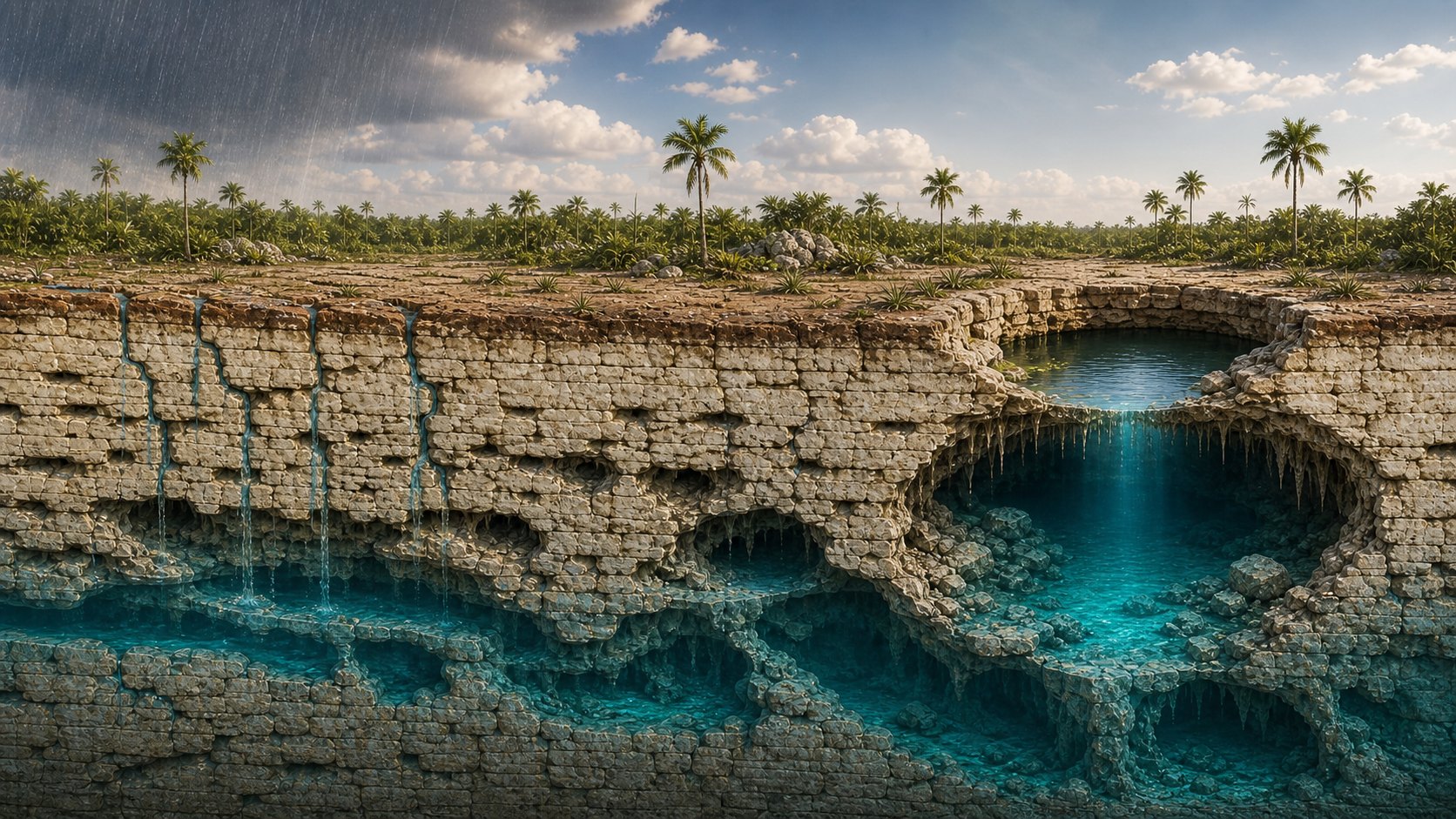
Rain filters down
Yucatán has thin soil, while its limestone is porous and fractured. Rather than forming large surface rivers, much of the water finds pathways underground.
Rock slowly gives way
As water crosses the soil it absorbs carbon dioxide and becomes slightly acidic. Over geological time it dissolves calcite, widens fissures and joins conduits into cavities.
The vault opens
When a cavity roof loses support, it may collapse partly or completely. The opening we see is the cenote; its water belongs to a far larger underground system.
Four ways to encounter the water
The category describes how much roof remains and how the cavity meets the surface. By itself, it does not measure difficulty or safety.
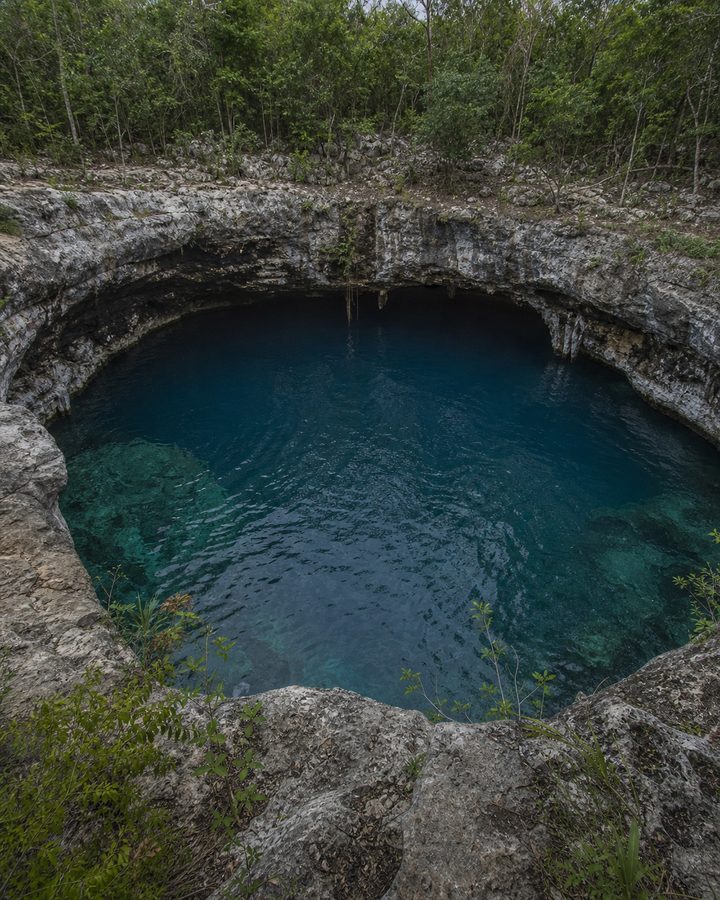
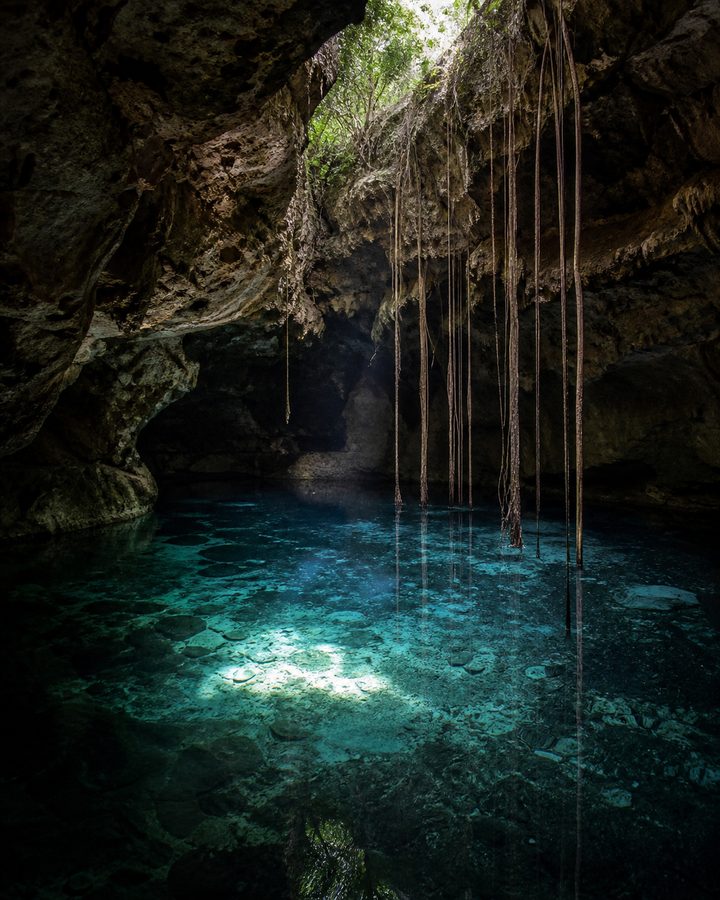
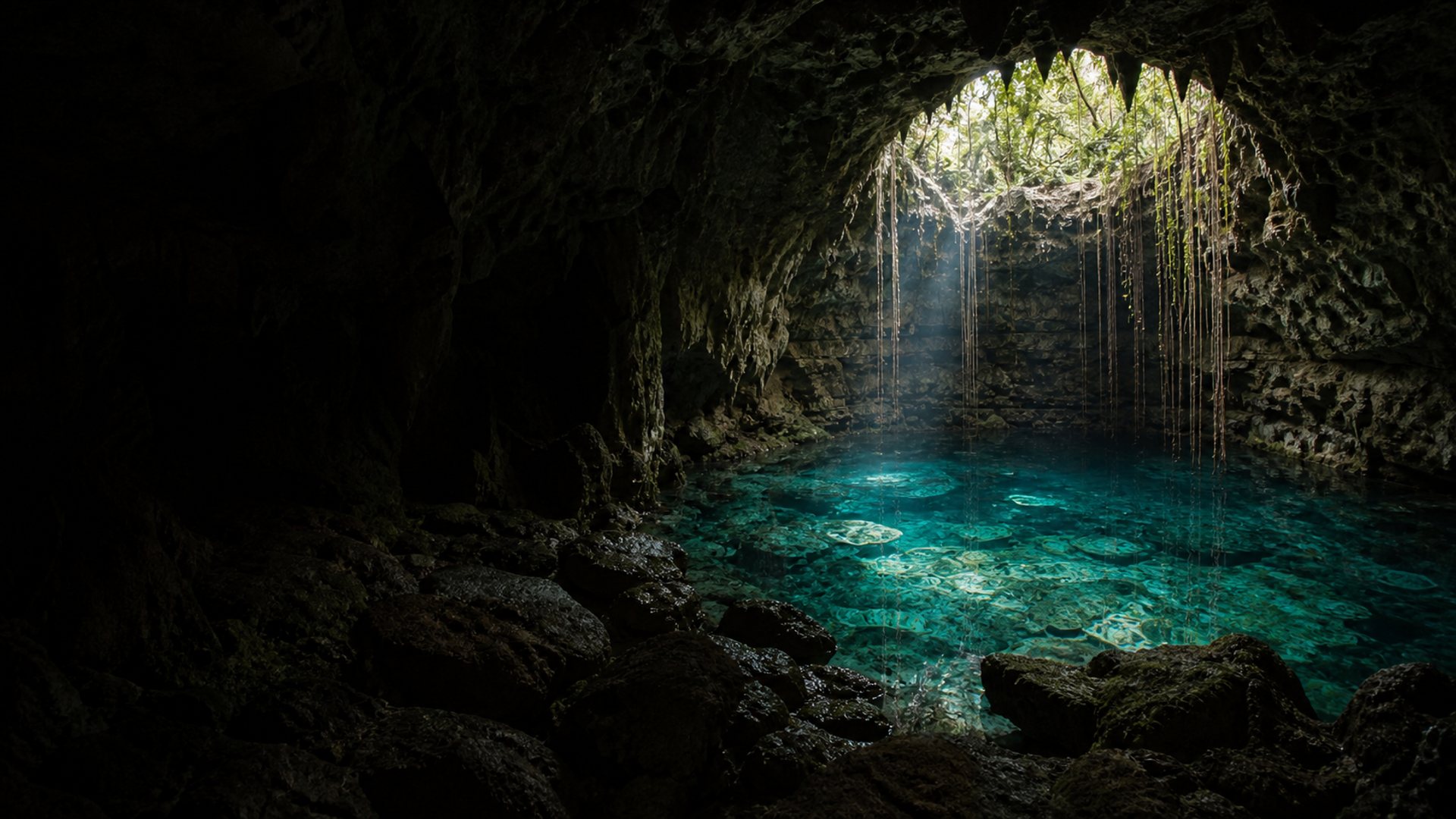
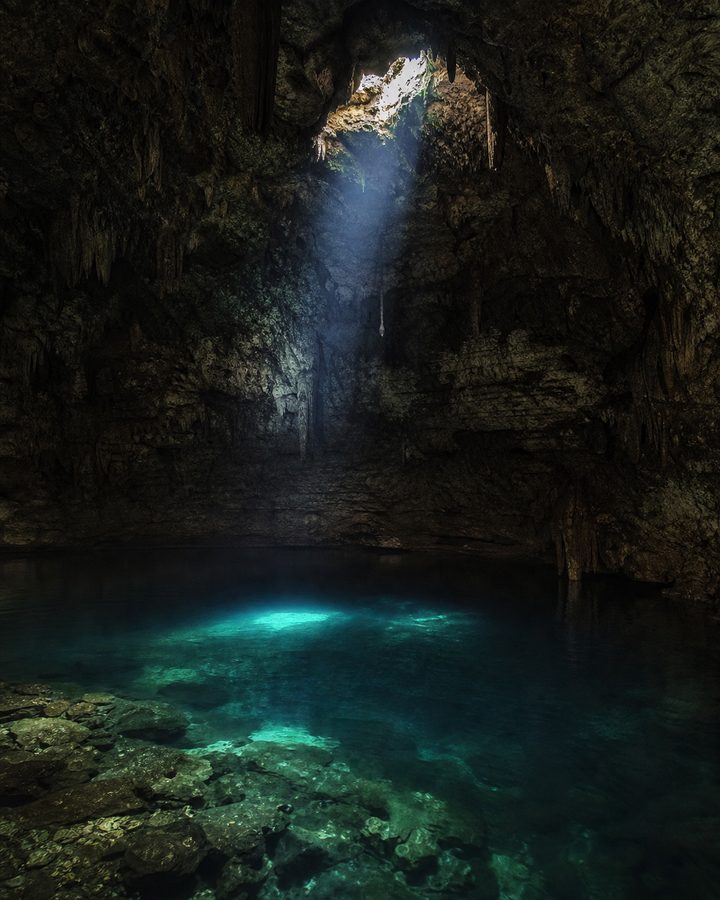
Concept images; they do not represent a specific site.
Open
The vault has largely collapsed, leaving the water open to the sky. It can feel more like an outdoor body of water, although depth and edges may change abruptly.
- Natural light
- High
- Typical access
- May be direct or by stairs
- Pay attention to
- Little shade and exposed rocky edges
Semi-open
Part of the roof remains. One cavity combines open sky, walls, ledges and shade, so the experience can change considerably within a short distance.
- Natural light
- Mixed
- Typical access
- Often by steps
- Pay attention to
- Strong transitions between light and shade
Cavern
The water lies inside a cavity with a visible entrance. Rock defines the space, while natural light arrives from the side or from above.
- Natural light
- Limited
- Typical access
- Entrance and floor conditions vary
- Pay attention to
- Wet surfaces and altered depth perception
Underground
The experience takes place underground and much of the vault remains. Access usually calls for more care, and orientation depends on natural or installed lighting.
- Natural light
- Very low
- Typical access
- Usually involves stairs
- Pay attention to
- Enclosed space and more demanding conditions
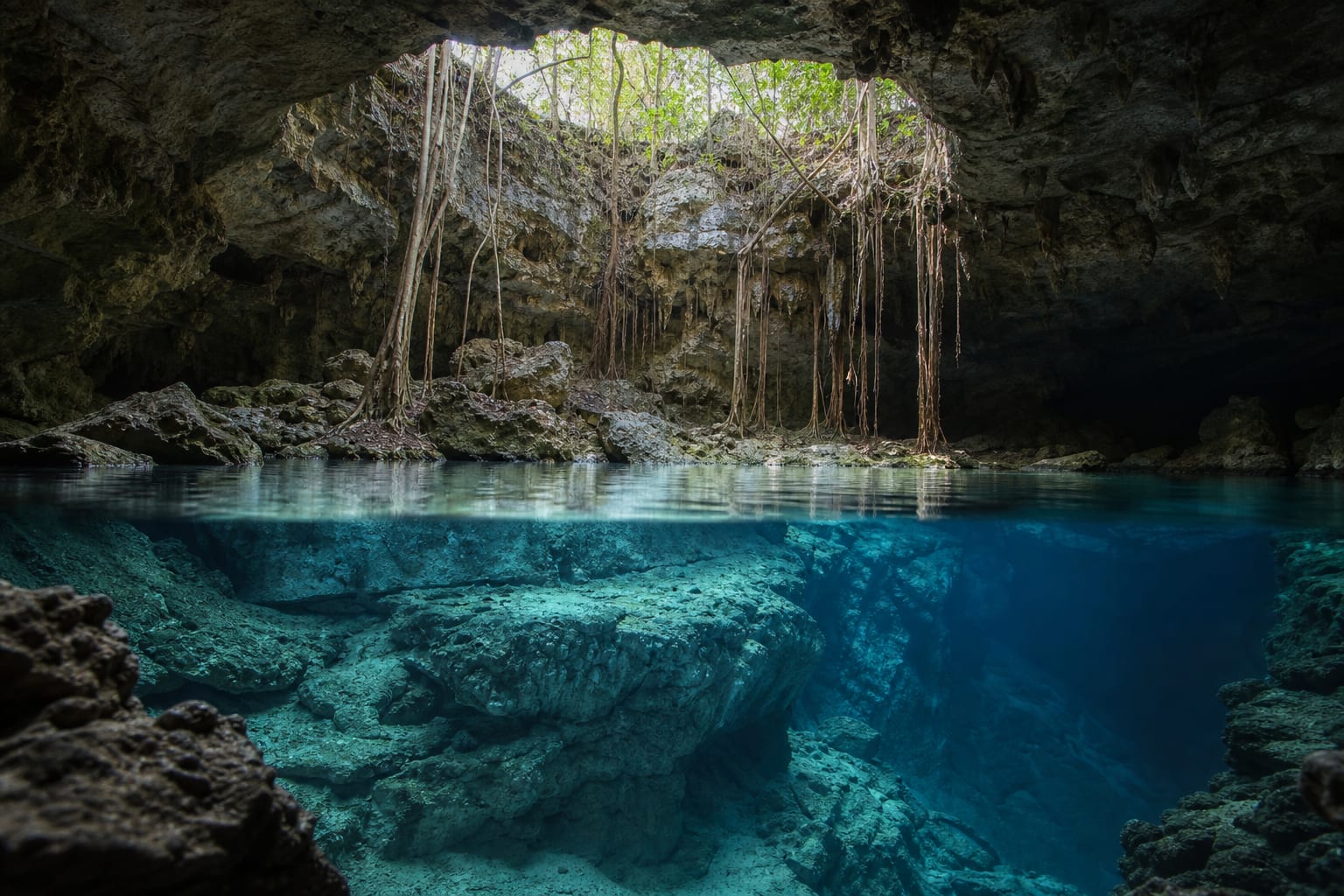
It is aquifer, ecosystem and a place with its own rules
The water may look still, but it participates in an underground network. Substances introduced at one point may travel; touching formations, leaving waste or using products in the water is not an isolated act.
Many cenotes also hold historical, spiritual, community or economic value. Visiting means respecting local rules, asking before photographing people or ceremonies and not reducing the place to an attraction.
Understand why the aquifer matters →Read the place before touching the water
- 01
Confirm conditions. Hours, access, depth, life jackets and facilities can change by site and season.
- 02
Follow local management. Wear a life jacket where required, respect closed areas and follow staff instructions.
- 03
Leave the system as you found it. Avoid products in the water, do not touch formations and take all waste back with you.