A peninsula built by the sea
The Yucatán Peninsula rests on an extensive carbonate platform. Its layers come from marine sediments accumulated and compacted over millions of years. The terrain is therefore low, the rock is permeable and few permanent rivers run across the surface.
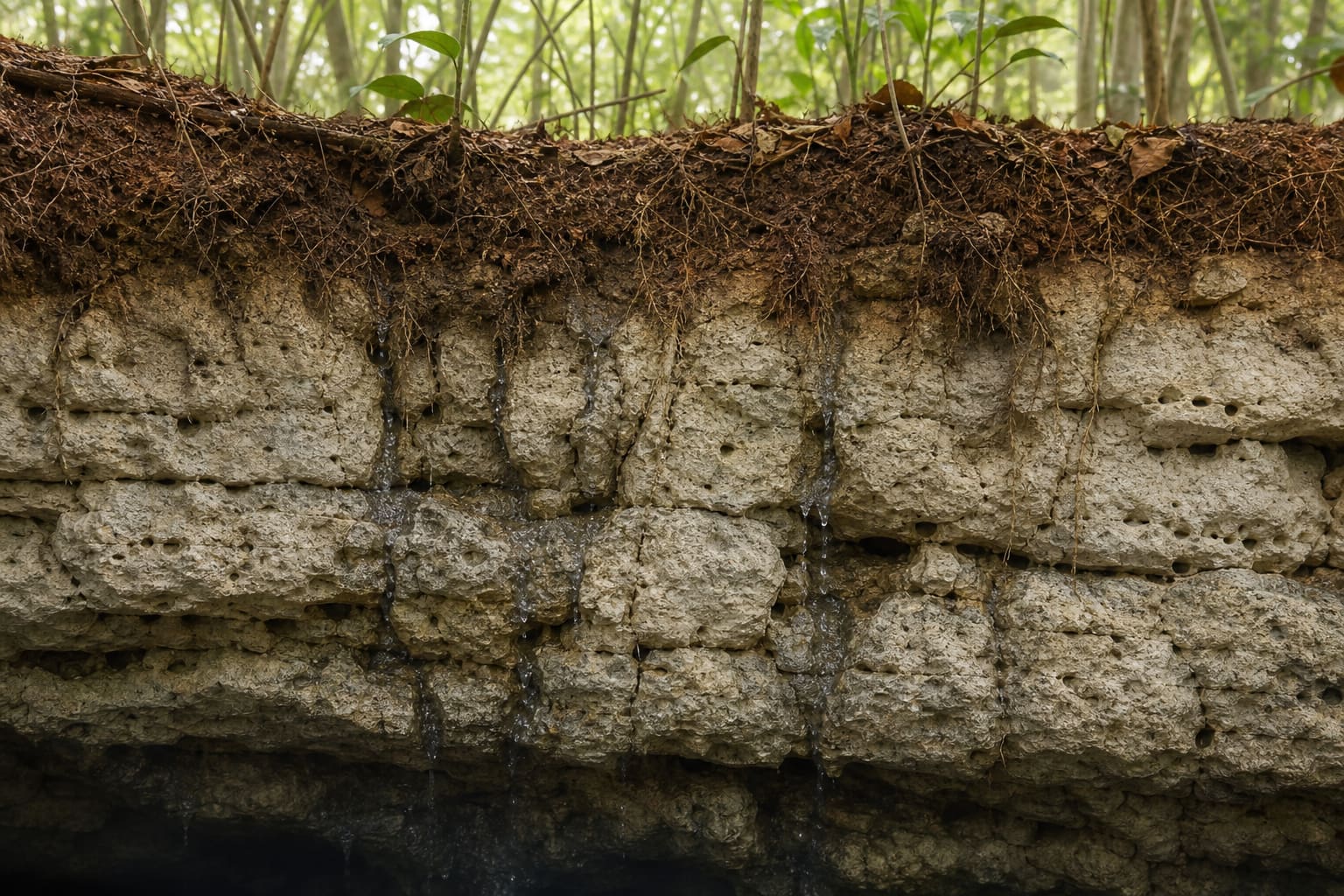
Rain takes another route. It filters through the soil and follows joints, pores and fractures until it reaches the aquifer. The water does not occupy one isolated cave. It circulates through a network of connected spaces whose form varies from place to place.
Water transforms limestone
As water passes through the atmosphere and soil, it takes in carbon dioxide. This makes it slightly acidic and able to react with calcite, the main mineral in limestone. The change is slow, but it is repeated whenever water moves through the rock.
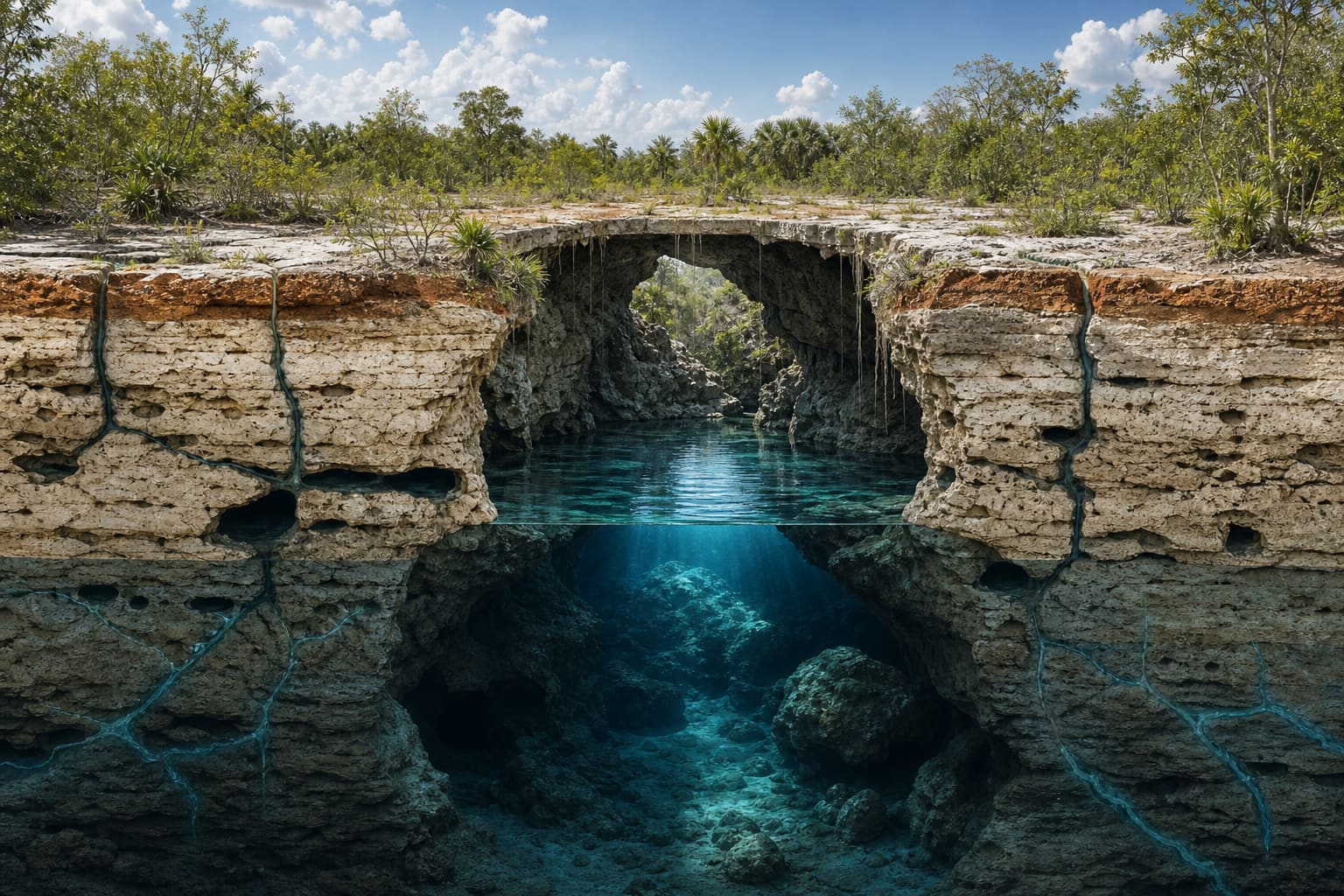
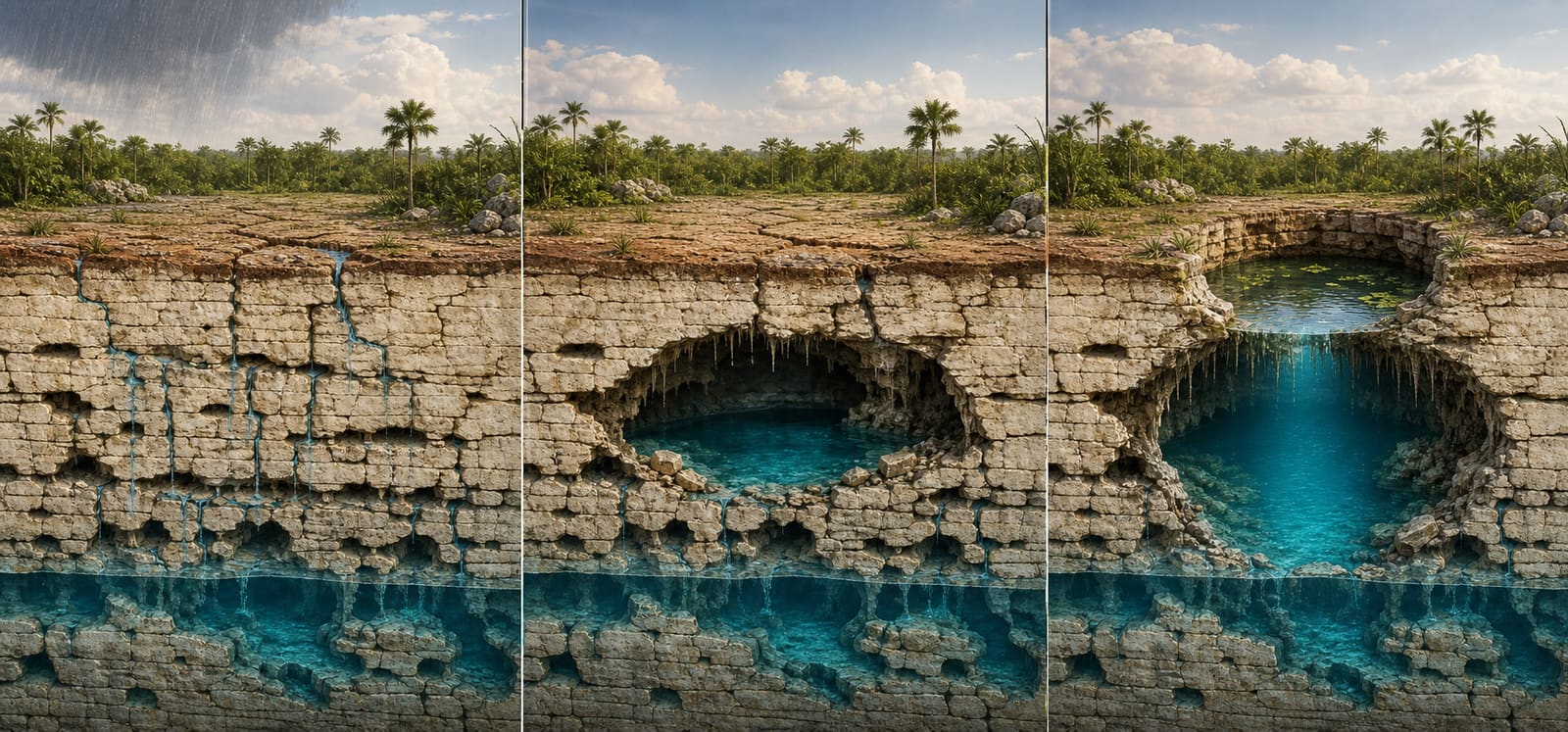
Existing discontinuities gradually widen. Some fissures become conduits, several conduits may join and the volume of a cavity grows. When these spaces reach the saturated zone, they become partly or completely flooded.
From a fracture to an opening
There is no single sequence shared by every cenote. Rock fractures, groundwater level, rainfall and roof thickness all modify the process. The illustration shows one possible evolution: infiltration, cavity growth and the opening of the surface.
The visible form does not tell the whole story
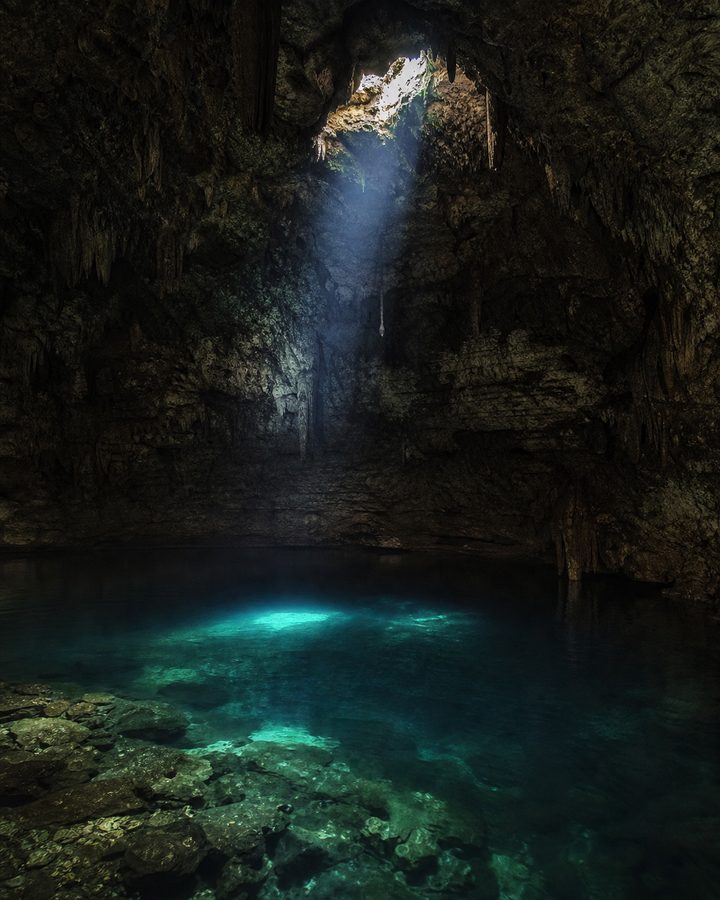
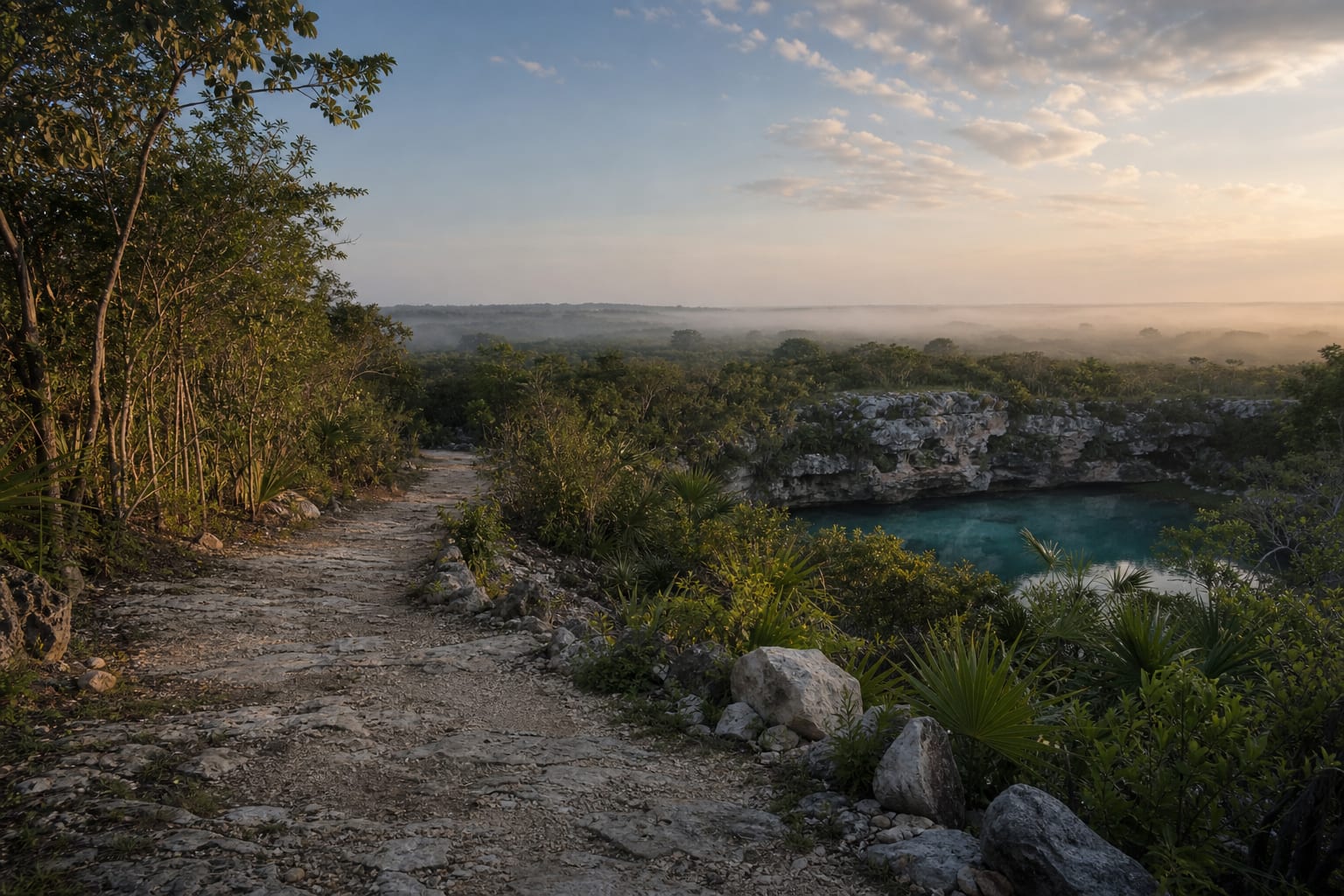
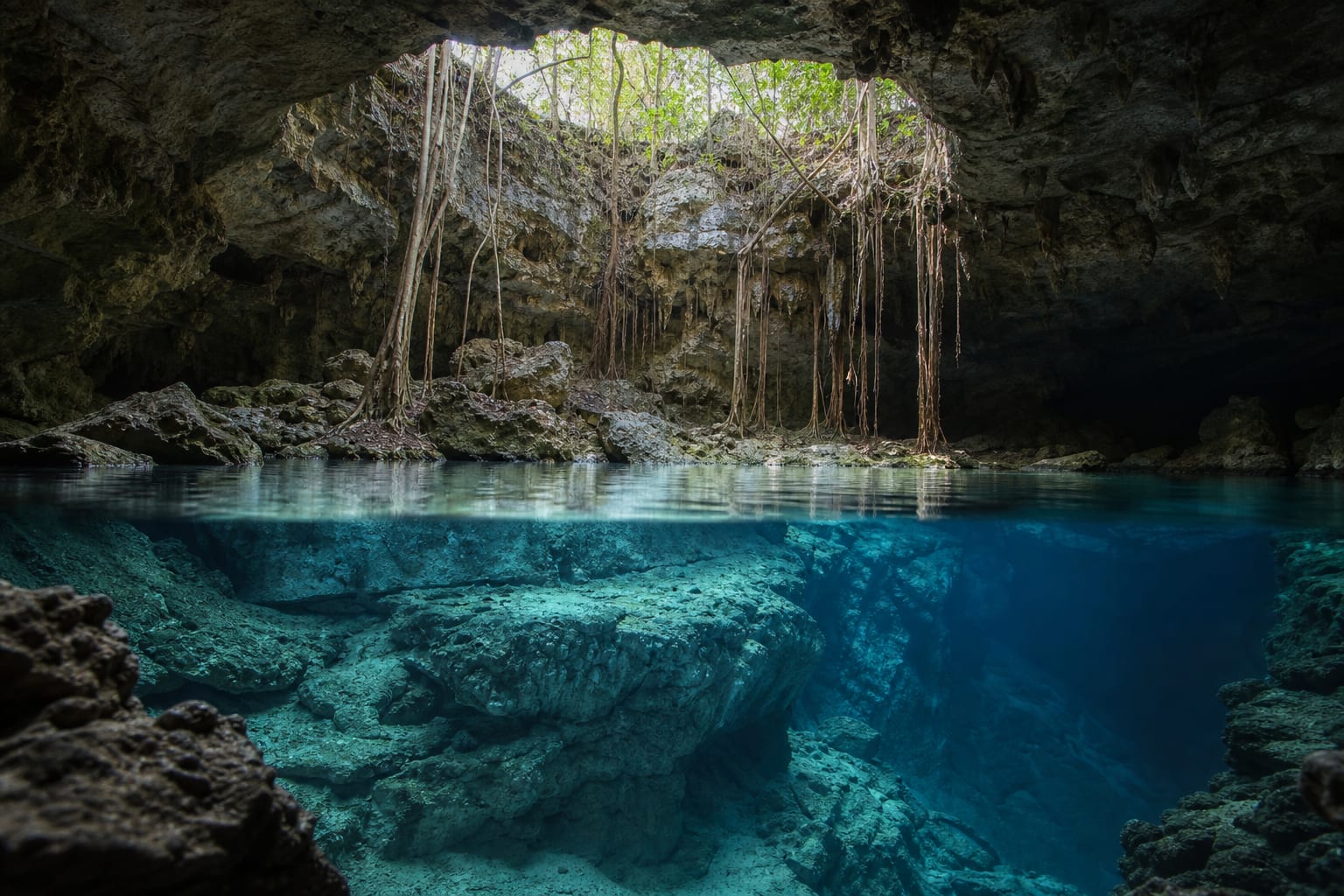
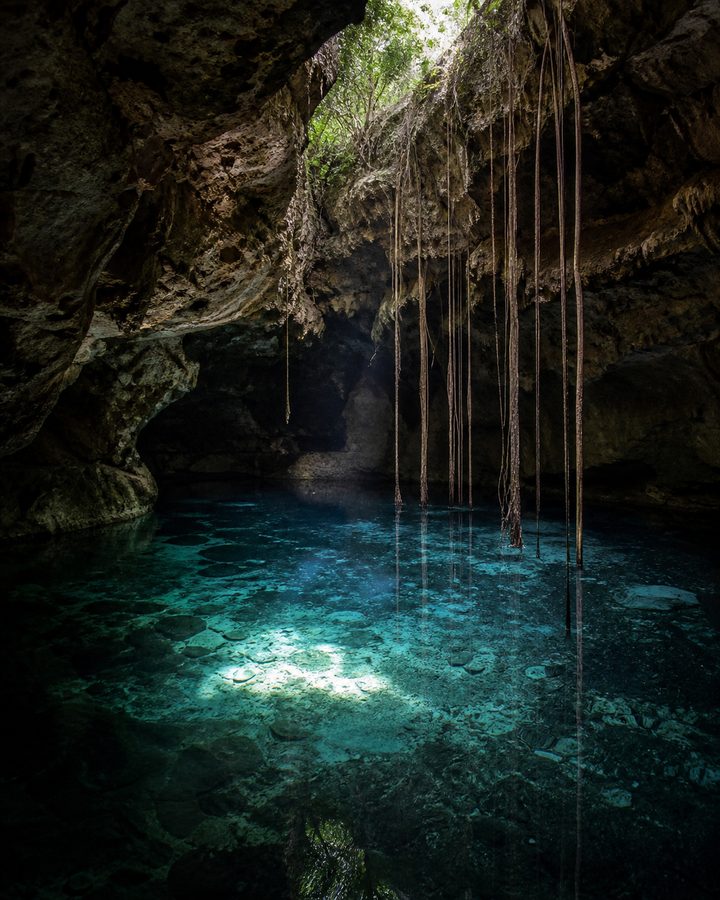
A cenote may remain underground, open inside a cavern, retain part of its vault or lie exposed to the sky. What we see depends on how much roof remains and on the relationship between the cavity, the terrain and the water level.
The categories open, partly open, cavern and underground help describe the place, especially access and light. They are not an exact measure of age. Two cenotes with a similar appearance may have evolved differently.
The opening is only the visible part
The same water system can circulate beneath different cenotes. What enters one opening, or infiltrates from the surface, does not necessarily remain there. Protecting a cenote means protecting the aquifer on which communities, ecosystems and human activities depend.
Sources and further reading
This article summarises geological and hydrogeological information published by public institutions and international organisations.