Our visit began in the centre of Homún, where we met Mitim. We climbed into his mototaxi and he took us to Hool Kosom. His family was waiting there: four women who manage and care for the cenote. We spent some time chatting with them before heading down to the water.
They told us what the place was like at first, when there was barely a small palapa. With the money they collected from admissions, they built changing rooms, more palapas and a room. They have worked there for about ten years and still have things to do, including more bathrooms and shaded spaces.
As they looked back over those years, the names of sisters, aunts and mothers came up. Welcoming visitors and caring for the facilities are tasks the family shares. We were getting to know the cenote through the people who had watched it change, little by little.
When we asked about the name, they explained that Hool Kosom means “Hole of Swallows” in Maya. They also told us about the area’s earlier inhabitants, people who worked in the henequen fields and would descend into the cenote.
The conversation led us to a tradition they maintain there: an offering for the aluxes. They explained that they hold it every three or five years, with the help of a shaman. They prepare an altar and food to ask for permission and protection. For them, this offering helps prevent accidents and the mischief that the aluxes might play on visitors.
They invite many people and share the food. They described it as a big celebration, a gathering of relatives and other people who join them.
We also spoke with an older man. His dream was to build small cabins to host visitors, although it was still a project awaiting completion. He told us they had found another cenote, but lacked the resources to reach it. After hearing how much they had built with admission income, those plans gave us a sense of everything they still hoped to do.
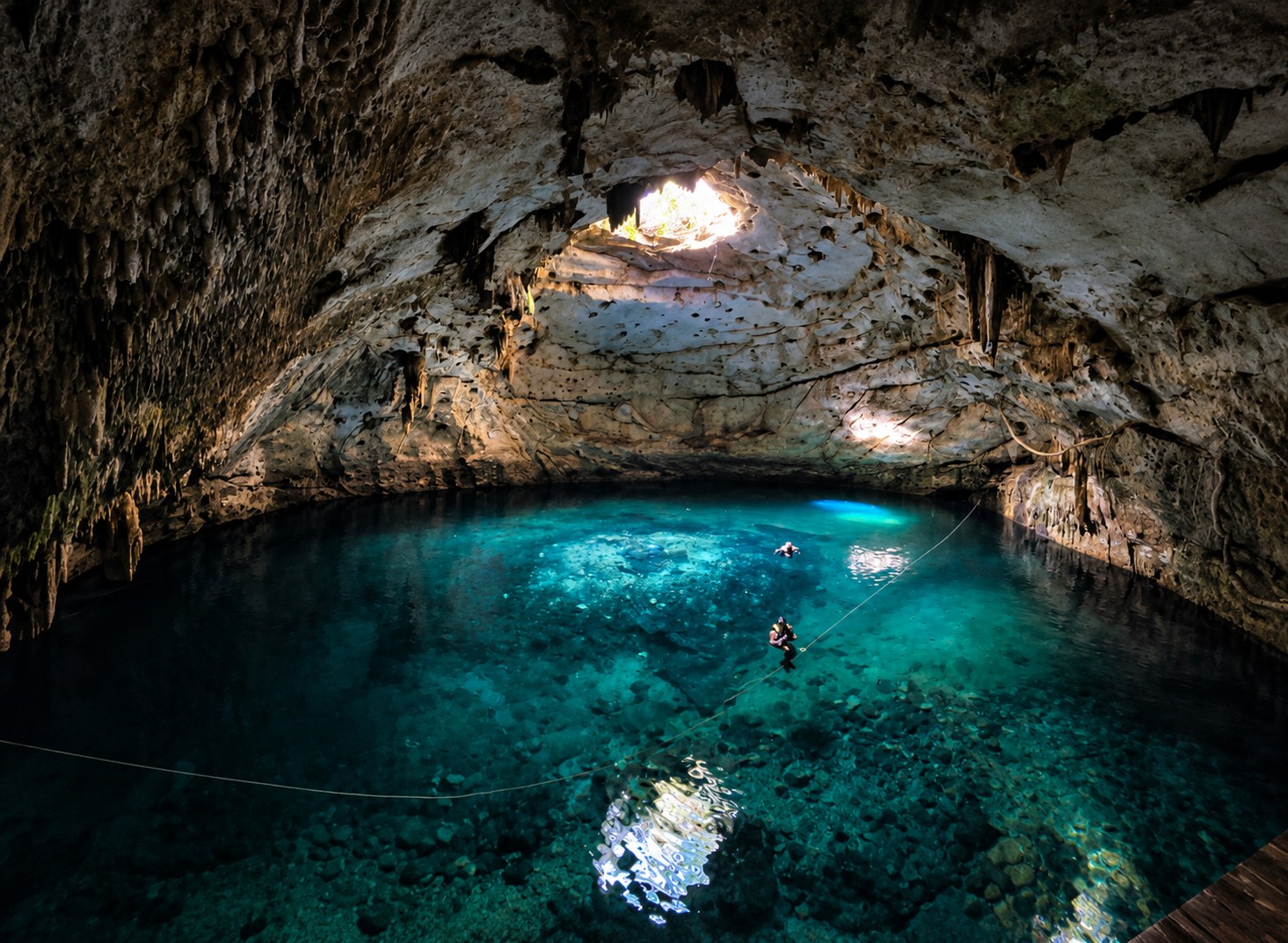
Then they invited us inside. We descended the stairs to the platform beside the water. From there we could appreciate the vaulted roof, the pale walls and the light coming through the opening above.
There were just five of us inside. In the water we watched the fish the family calls catfish, while swallows flew in and out through the opening above us. There were the birds we had just been talking about, the ones that gave the cenote its name. We stayed for a while to watch them. The place was spectacular, and we could enjoy it quietly.
If you visit, bring cash. Mobile signal is very limited: we could not connect to the internet, and the site does not accept card payments because of that lack of connection. Confirm opening hours and admission prices before going, and consider the entrance stairs if anyone in your group has mobility difficulties. Set aside some time to chat with the people who welcome you, too. Much of what we share here came from that conversation.
At Hool Kosom we got to know the people who make a visit possible. Admission income has allowed them to improve the site and supports work that continues after visitors leave: maintaining the facilities and caring for the cenote.
That is why visiting and supporting these local places matters. The families who manage them create the conditions that allow us to enjoy them and contribute to caring for our aquifers. Our part is to support that effort: respect the instructions, avoid polluting the water and take our rubbish with us.
Written by Alma and Cesare, Cenote Scout.