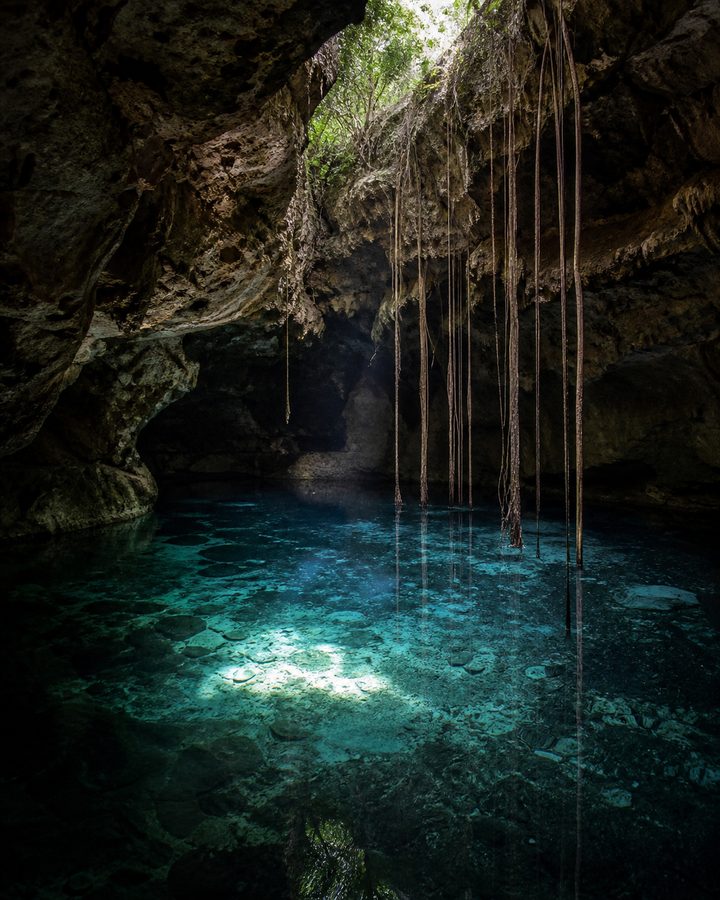
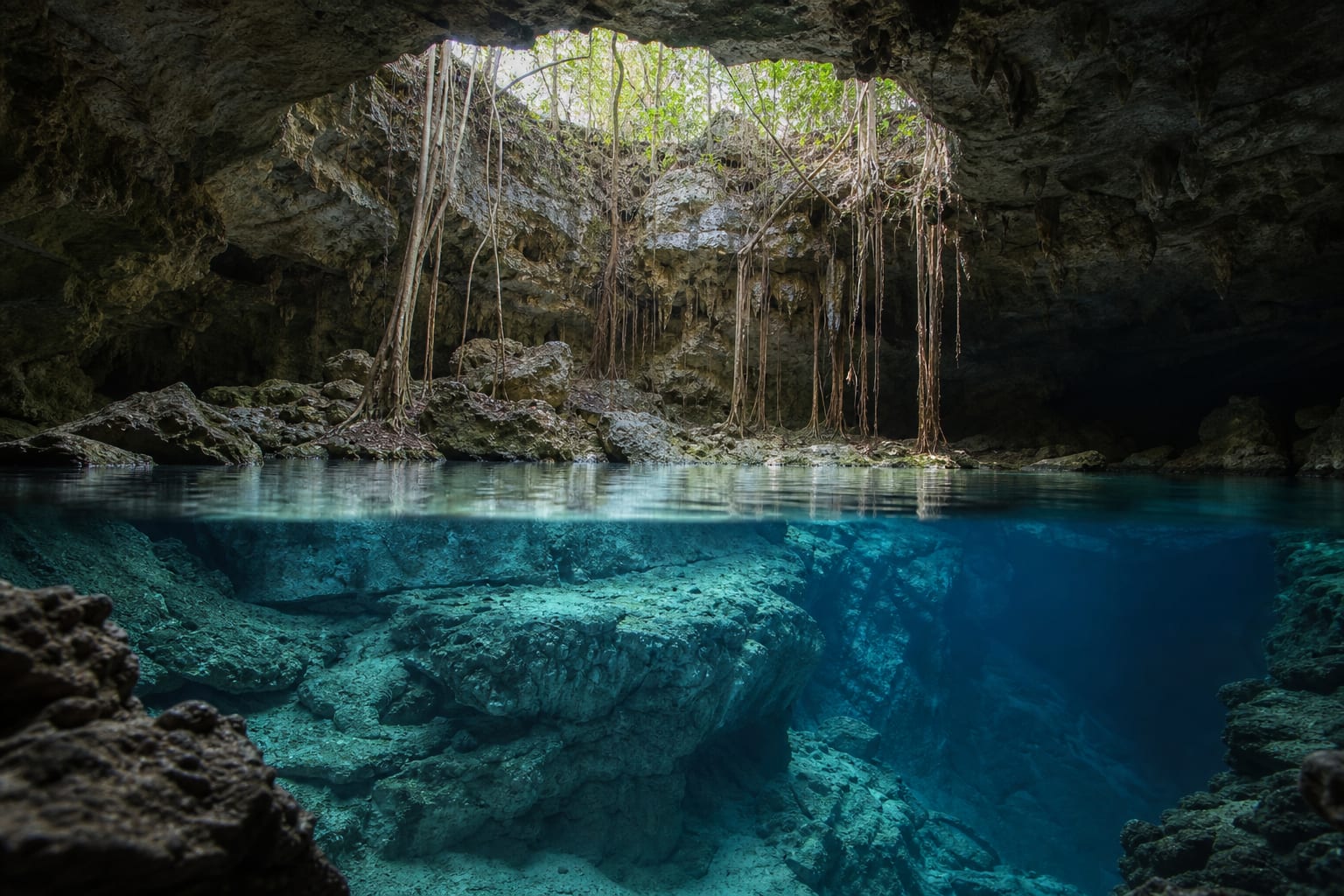
A rock that does not filter enough
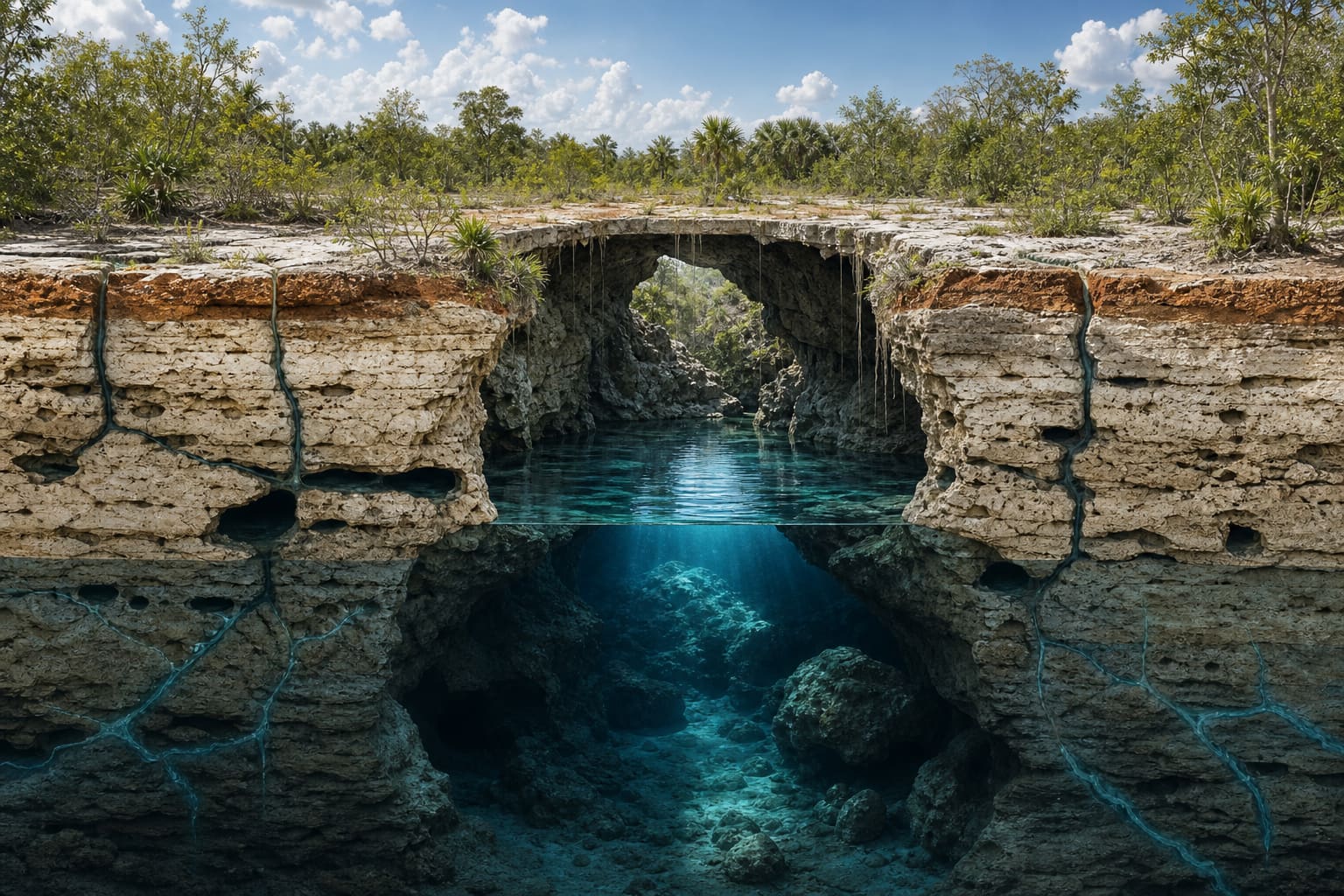
The same feature that makes cenotes possible, porous, fractured limestone, also leaves the aquifer especially exposed. The Peninsula's thin soil offers little natural filtering before water reaches the subsoil.
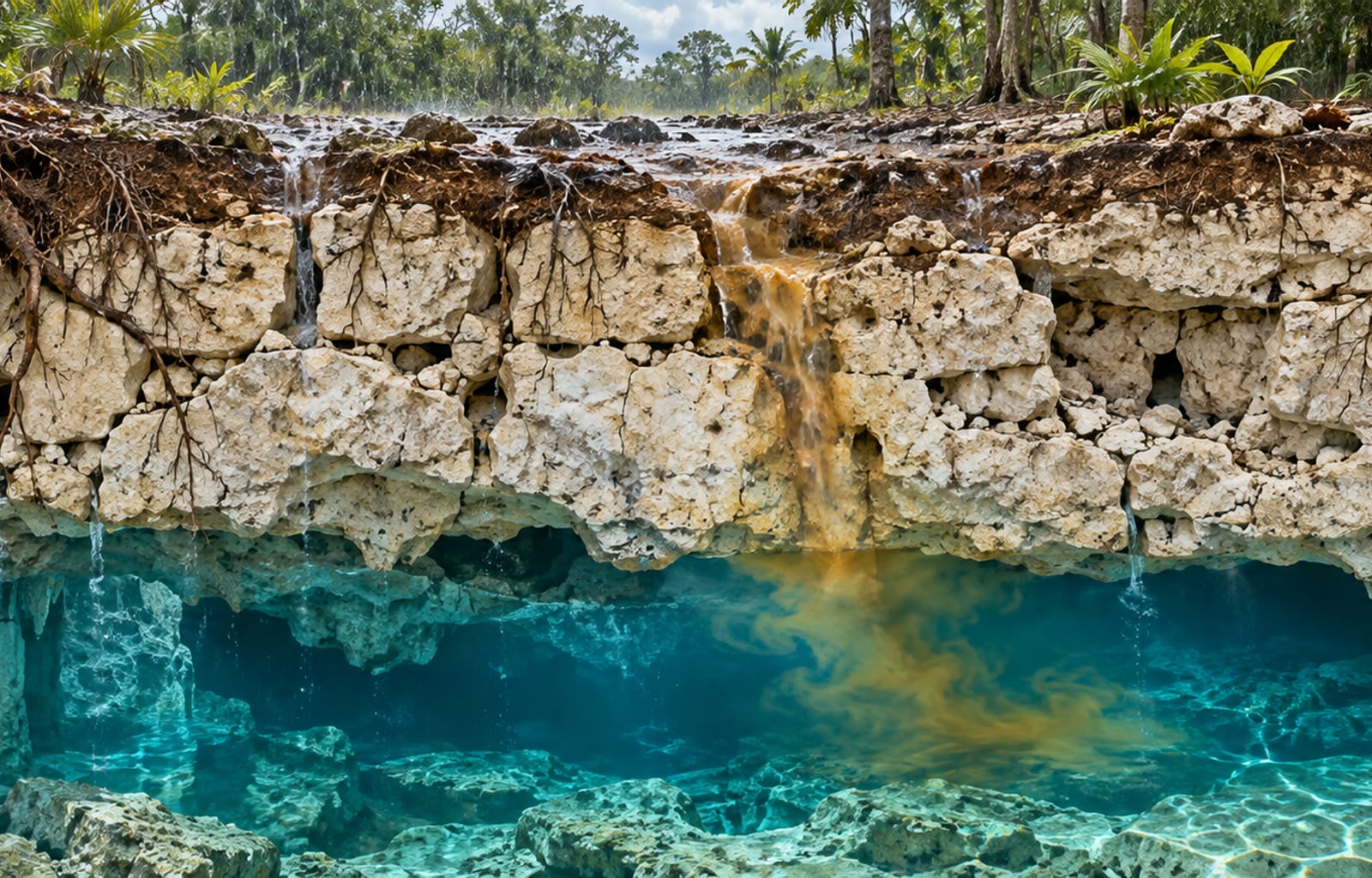
That means whatever is spilled, sprayed or buried on the surface can reach the aquifer within weeks, not the decades typical of aquifers protected by clay layers or other less permeable material.
Wastewater that is not always treated
Much of the housing and many tourism developments across the Peninsula rely on septic tanks or absorption wells instead of treatment plants. When that system fails or reaches capacity, wastewater infiltrates directly toward the aquifer.
The most measured result is a rise in nutrients such as nitrates and phosphates, which can alter water quality in nearby cenotes and, downstream, in the coastal ecosystems that depend on the same groundwater discharge.
Concentrated industrial livestock farming
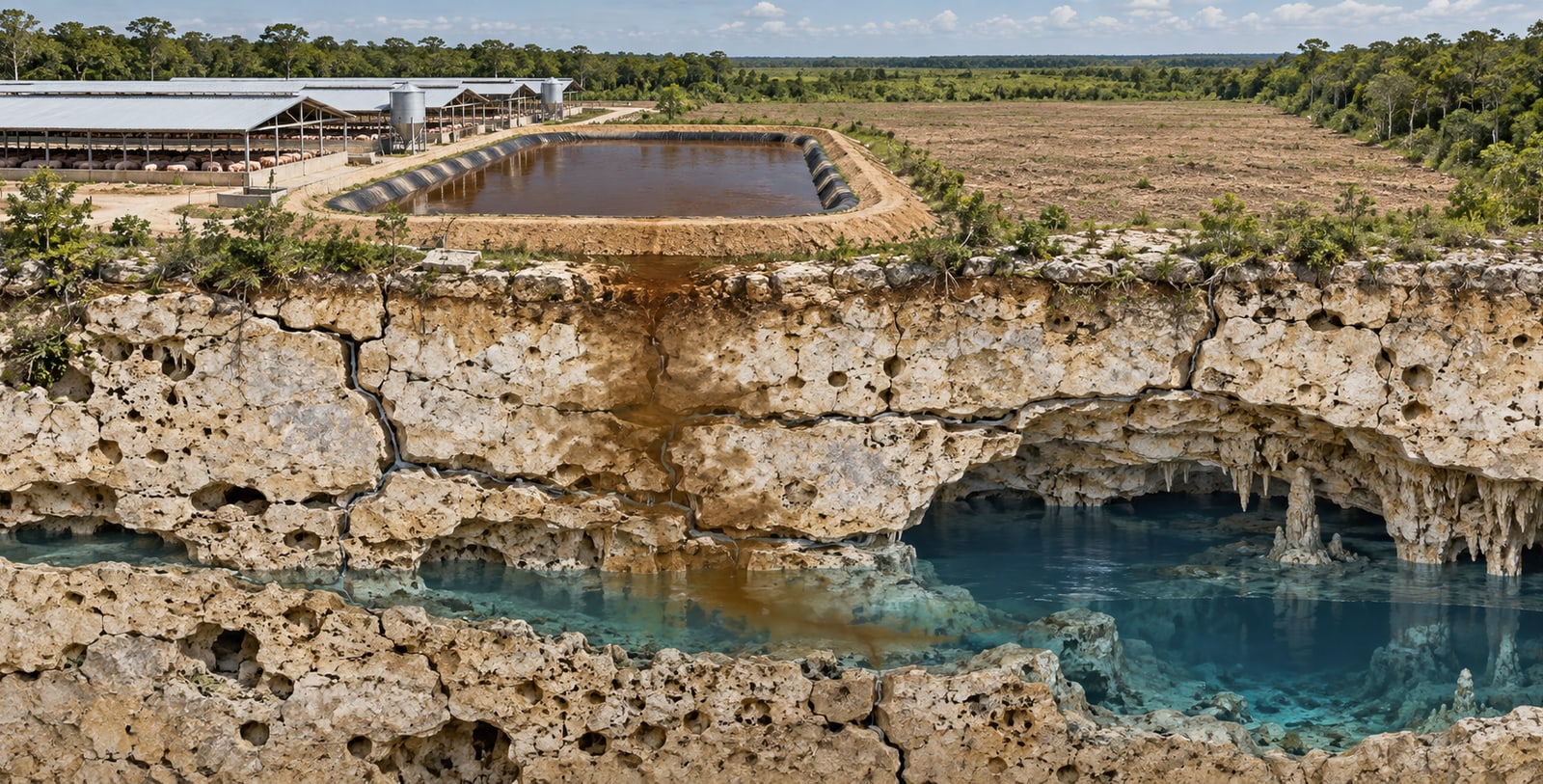
The expansion of large-scale pig farms in northern Yucatán has been documented as one of the most cited pressures on the aquifer, given the volume of waste they generate and their proximity to highly permeable ground. Public debate in several municipalities has centred on exactly this point: the distance between a farm and the nearest cenotes or drinking-water wells.
Recharge zones under urban and tourism pressure
Urban and tourism growth also exerts pressure, though less visibly: every paved surface reduces natural infiltration at that spot and concentrates runoff elsewhere. Building over land identified as high-recharge zones reduces, at a regional scale, the system's capacity to renew itself.
Intensive agriculture adds to this, with fertilisers and pesticides following the same fast infiltration route that the limestone already provides. No single one of these pressures would explain the state of the aquifer on its own; together, they do.
Protecting the aquifer is a regional-scale decision
None of these pressures gets solved cenote by cenote. Treating wastewater, regulating industrial livestock farming and protecting recharge zones require decisions that span entire municipalities, not just the edge of one tourist site. Choosing operators and lodging with their own wastewater treatment is one way a visitor can, at least, avoid adding to the pressure.
Sources and further reading
This article summarises hydrogeological information on contamination risks published by research bodies and public agencies.