One aquifer, not an archipelago
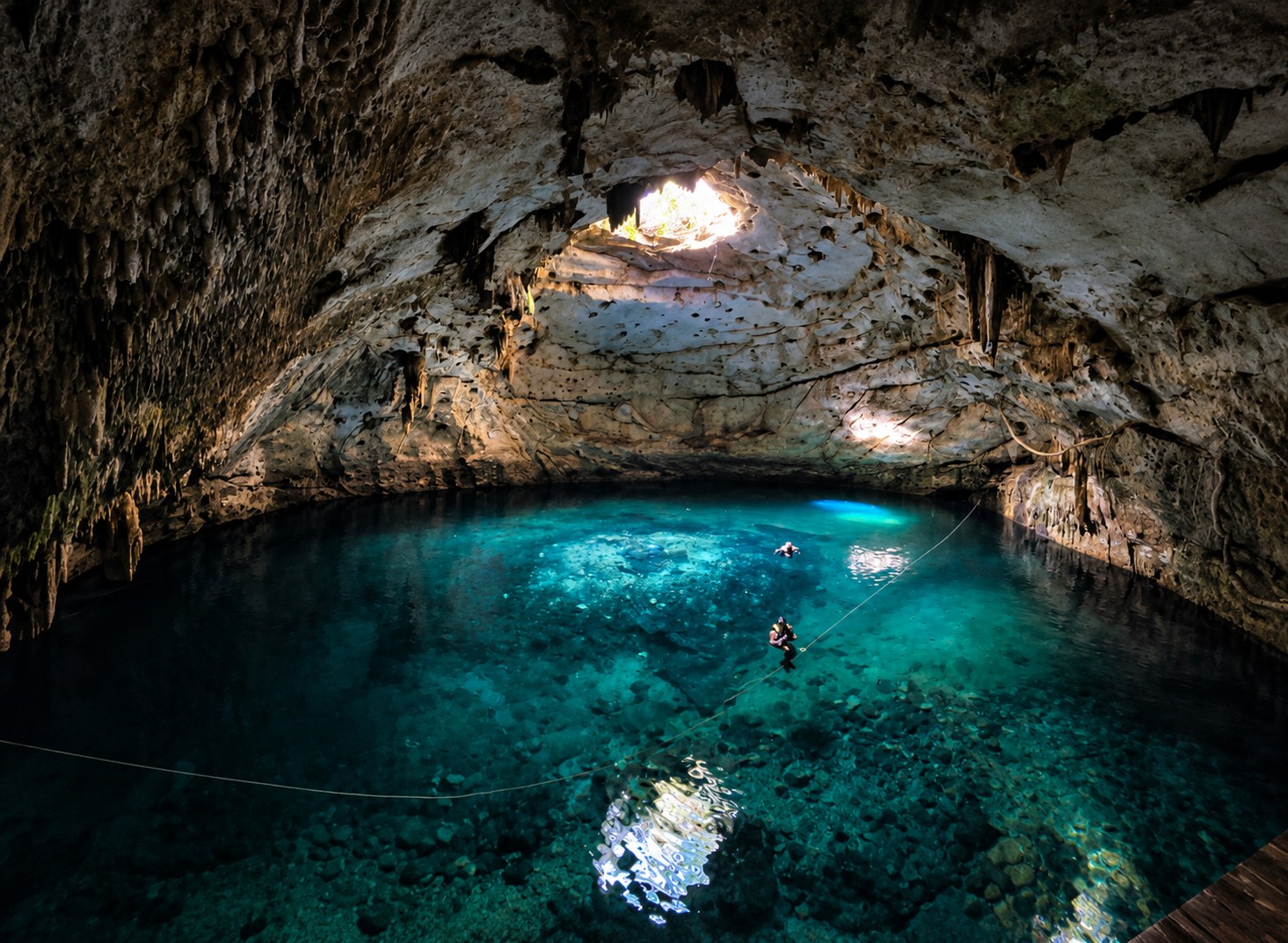
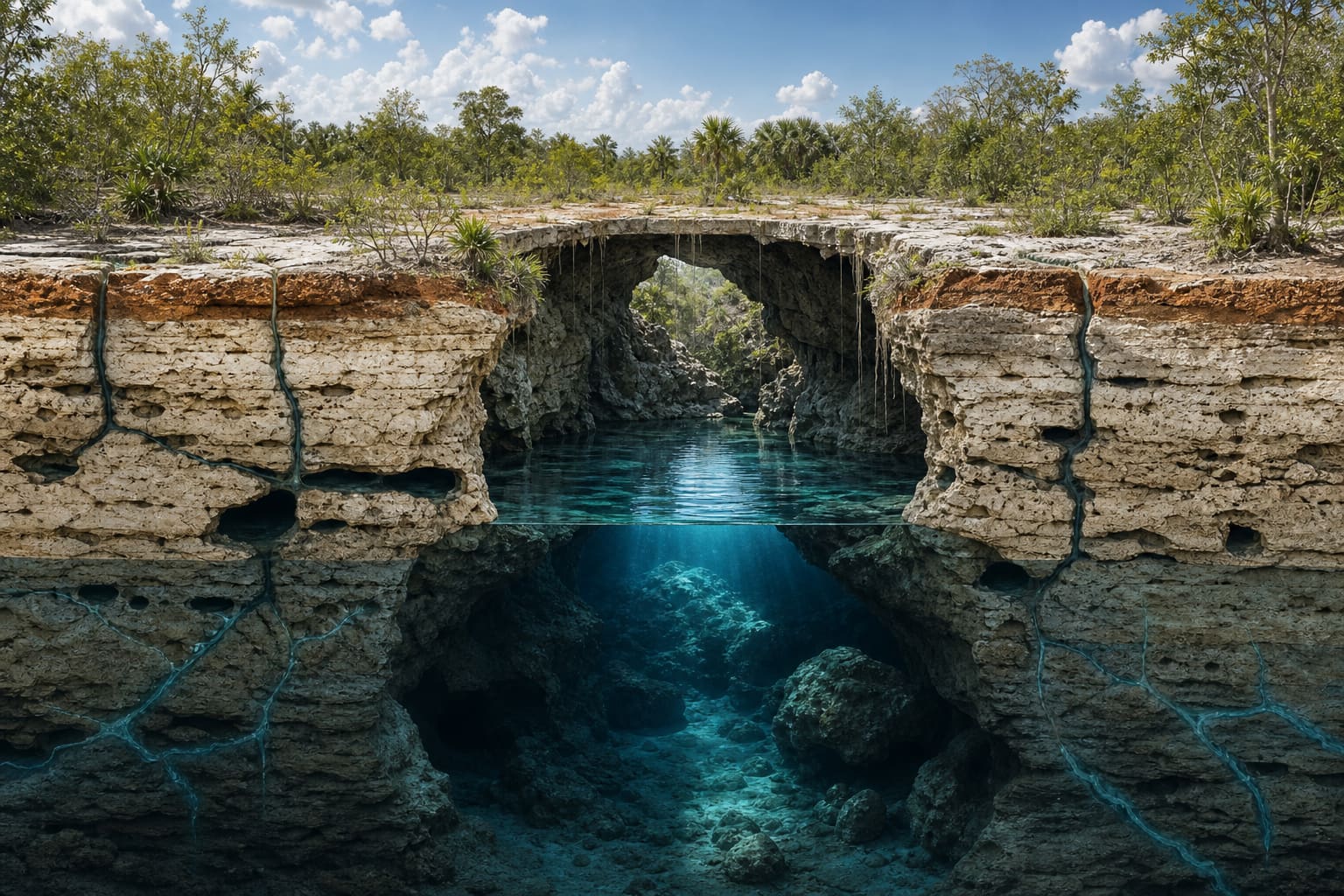
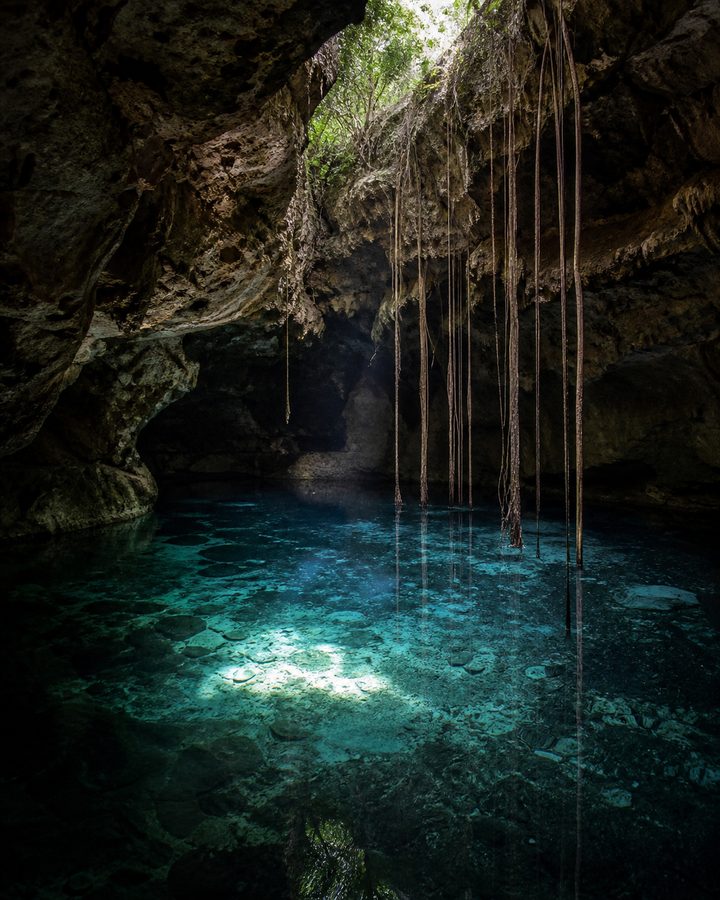
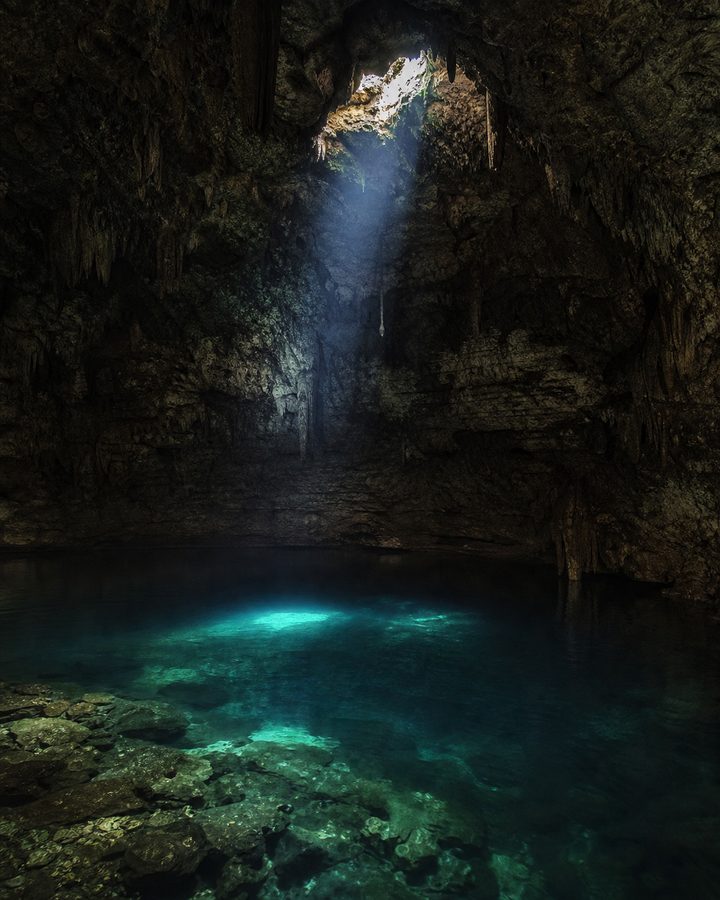
It is easy to picture cenotes as independent points scattered across the map. Underground, most are connected. Water enters through one cenote, travels kilometres of passages and may exit through another, or continue on to the sea.
This connection changes what caring for a cenote actually means. A pollutant released at one point does not stay there: it circulates through the aquifer and can surface, weeks or months later, several kilometres away.
Fresh water over salt water
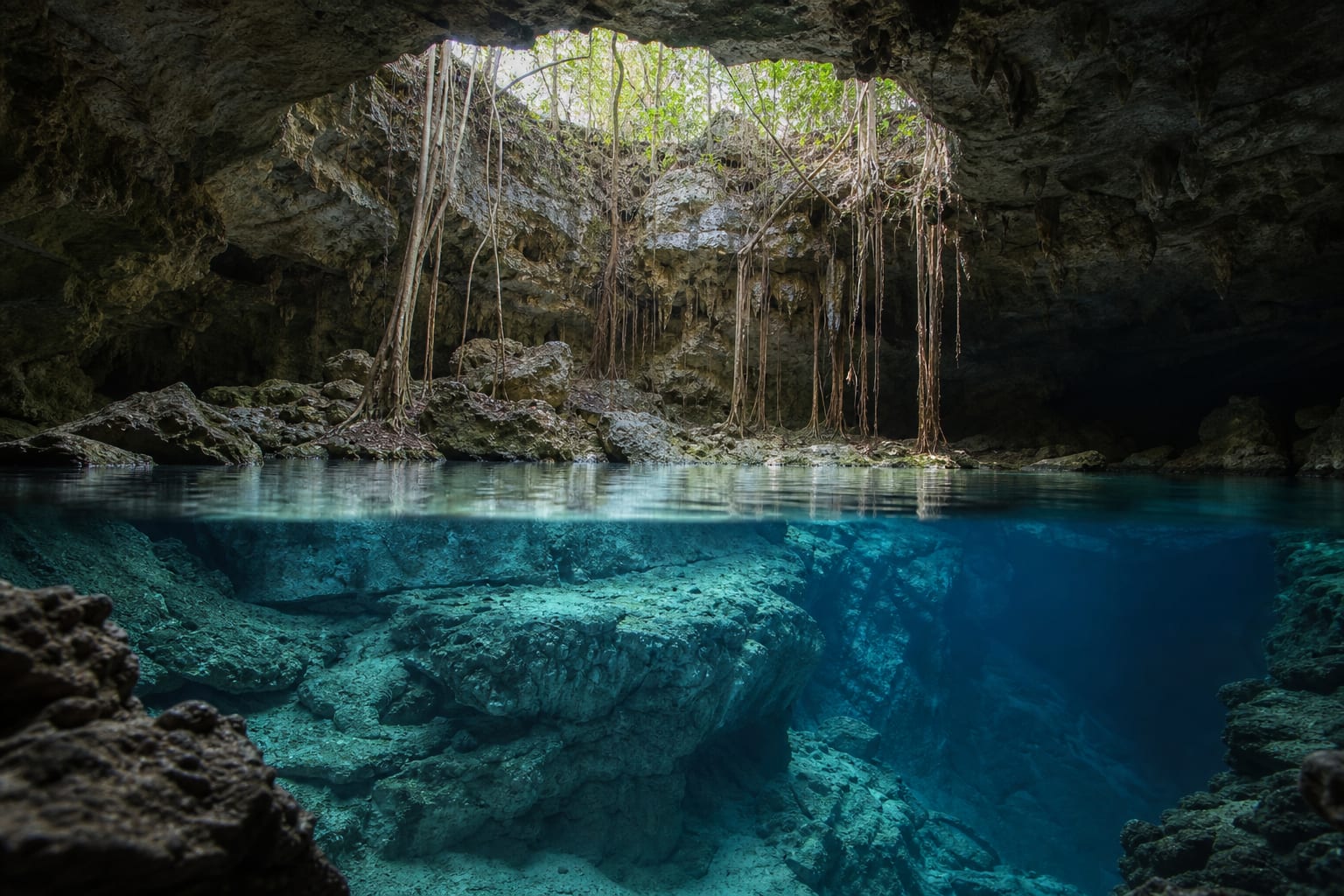
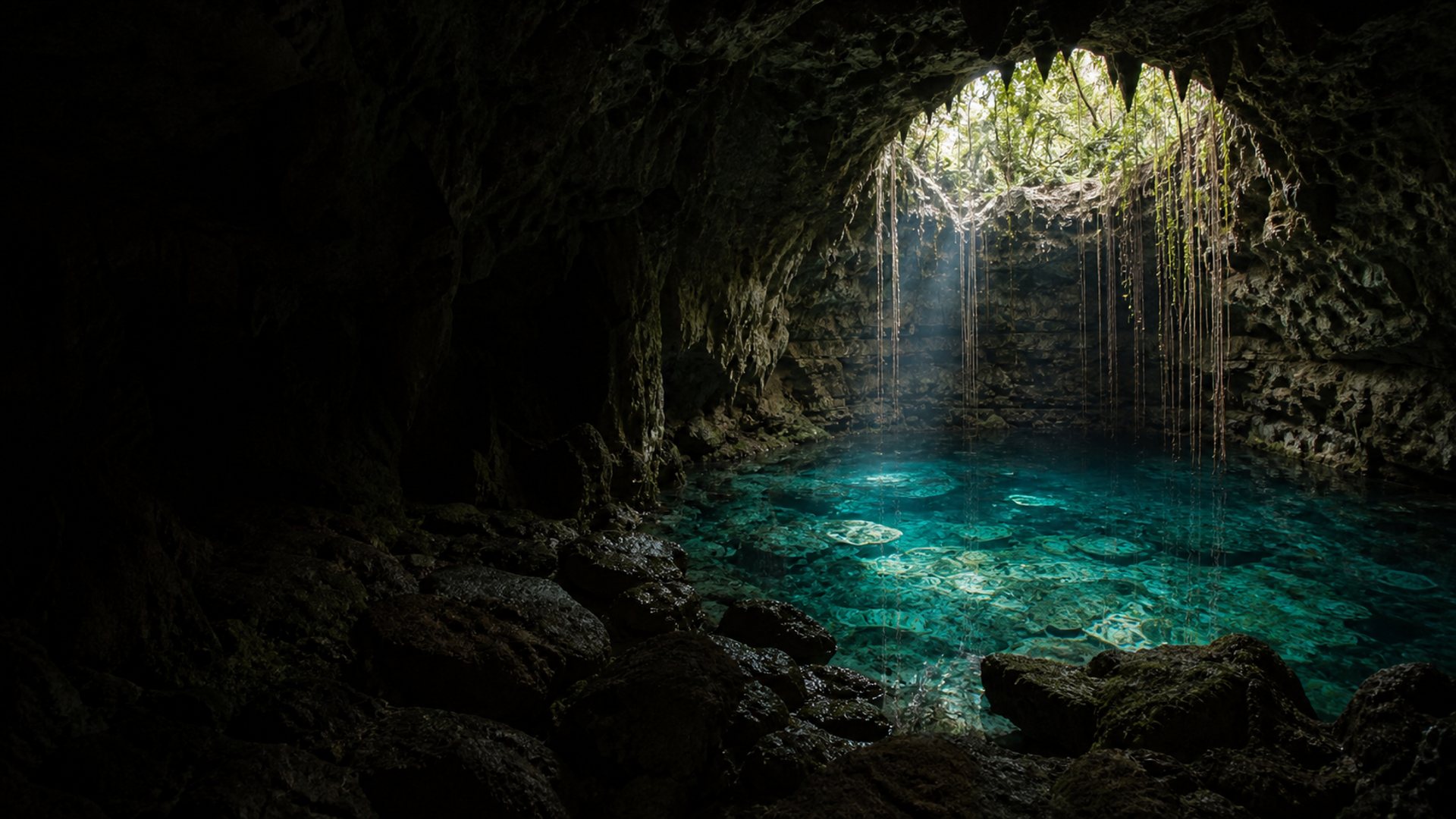
Near the coast, fresh water from the aquifer floats over a layer of salt water seeping in from the sea. Between the two, a mixing zone forms, the halocline, visible in some cenotes as a blurred band that distorts light.
This layered structure explains why the water in a cenote can be fresh at the surface and brackish a few metres down, and why the whole system responds to what happens both inland and along the coastline.
What runs underground also reaches the sea
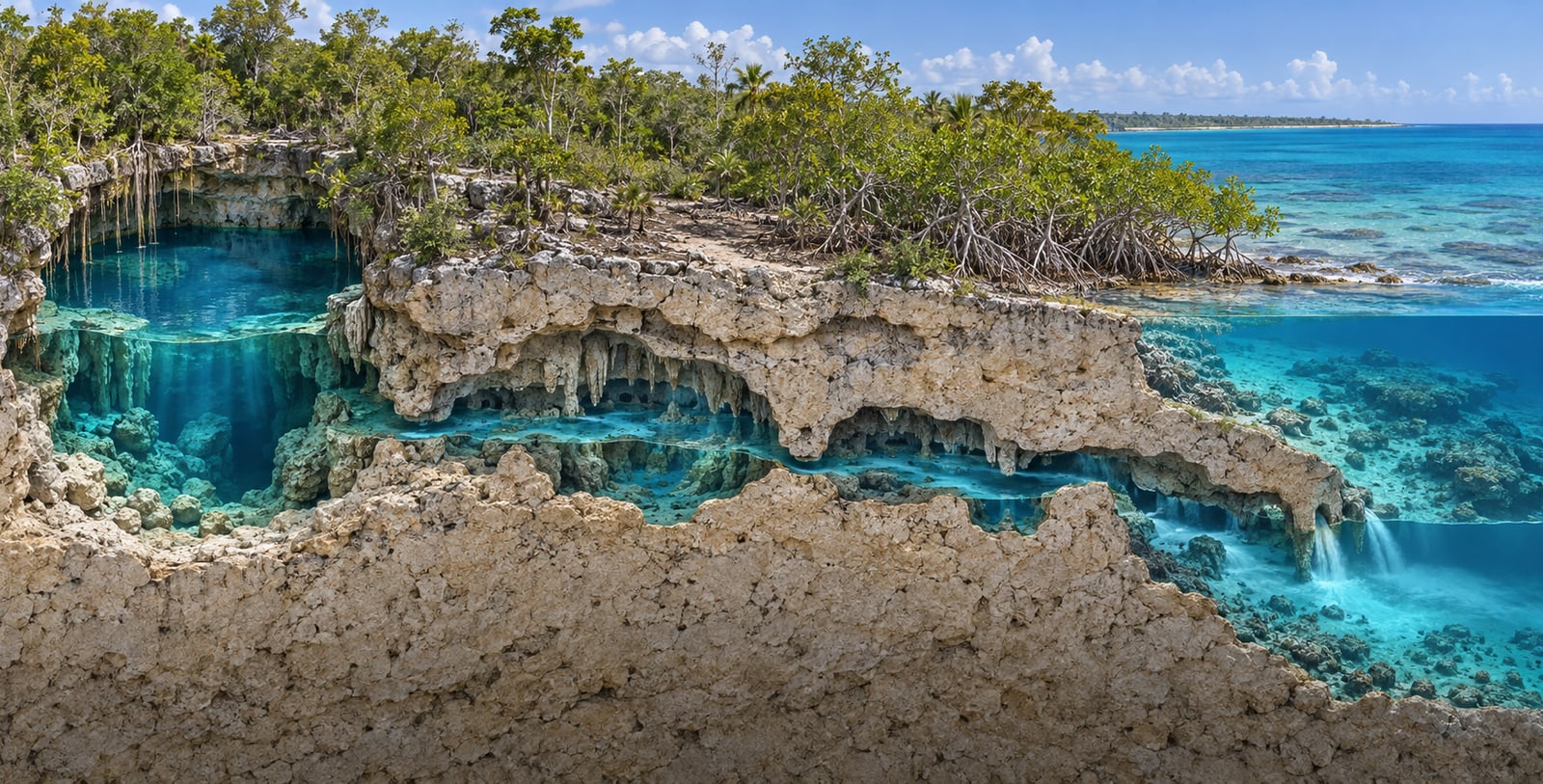
The aquifer does not end at the coast. Much of that groundwater discharges into the Caribbean through submarine springs and the porosity of the rock itself, carrying along whatever it collected on the way: nutrients, sediment and, at times, pollutants.
What travels with the water
Research on water quality in the Riviera Maya has linked aquifer discharge to measurable changes in reefs close to the coast. The link between what happens underground and what happens at sea is not always visible from the surface.
That is why the reach of the system matters as much as its depth. A cenote far from the sea still belongs to the same circuit that feeds mangroves, reefs and the life that depends on them.
Why it matters where the water ends up
Caring for a cenote is not just about keeping one access point clean. It is a decision about a system that crosses forests, towns, farmland and reefs, and that does not respect the boundaries of a property or a municipality. What enters one cenote can end up, much later, in another cenote, in a mangrove or in the sea.
Sources and further reading
This article summarises hydrogeological information published by research bodies and public agencies.